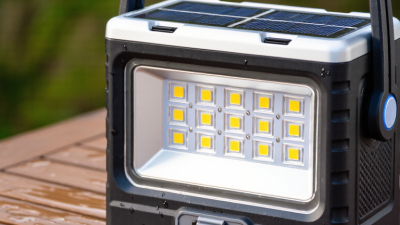
Choosing a reliable Rechargeable Led Flashlight supplier in China takes more than comparing catalog prices. Buyers should examine battery options, charging ports, beam consistency, housing materials, and quality-control records. A sample unit can reveal details a product sheet may miss: a loose switch, uneven beam edges, or a charging indicator that is hard to read. Small details matter.
The strongest suppliers can explain how they test performance and manage production changes. Ask for clear specifications, sample availability, and consistent communication. A low quotation may hide trade-offs in materials or inspection. Sometimes, the cheapest option costs more later.
This guide compares supplier capabilities, product ranges, customization, and practical sourcing considerations. It also looks at questions buyers can ask before placing an order. A named expert quotation cannot be responsibly included because no source articles or verifiable expert statement were provided. Inventing one would weaken trust. That is a limitation worth acknowledging, not disguising. Use the comparison as a starting point, then verify claims directly with each supplier.
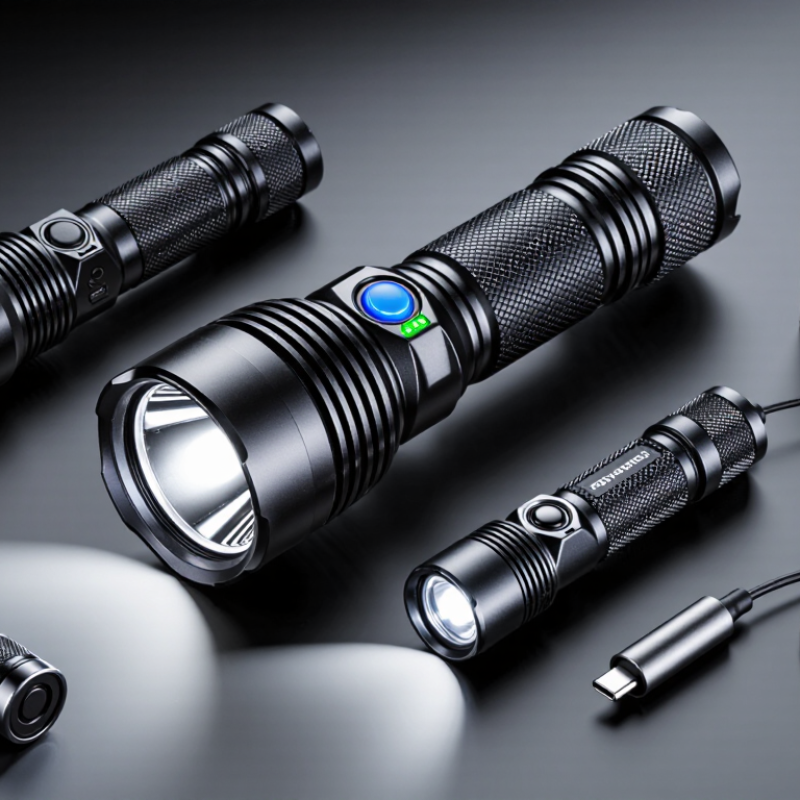
A rechargeable LED flashlight is a portable light that uses a rechargeable battery to power one or more light-emitting diodes. It can be charged again through a USB port or a dedicated charger, depending on its design. No disposable batteries are needed for routine use. Handy in a hallway, workshop, or roadside kit.
Unlike a basic torch, many models offer adjustable brightness, focused or wide beams, and battery-level indicators. These features affect everyday use. A narrow beam can help spot a distant sign, while a broad beam is more useful under a sink or across a workbench. Higher brightness often uses more power, so the strongest setting may not last as long as expected. That trade-off matters.
When comparing Chinese suppliers, buyers can request clear specifications for battery capacity, charging time, runtime, light output, and water-resistance rating. Ask how those figures were tested, and check sample units under realistic conditions. A specification sheet can look tidy, but it cannot show how a switch feels with cold hands or whether the charging port cover stays secure. These details are easy to overlook. A dependable supplier should explain test methods and provide consistent product information, though even careful checks have limits.
China’s rechargeable flashlight market is not built around one kind of supplier. The chain is layered. Some firms make finished lights, while others focus on LED modules, lenses, aluminum housings, switches, or charging circuits. Battery packs may come from a separate specialist. This division helps factories combine parts quickly, but responsibility can become less clear when a finished light fails.
Suppliers commonly operate as OEM or ODM producers, component makers, or trading companies coordinating several factories. OEM projects follow a buyer’s drawings and specifications. ODM suppliers offer an existing design that can be adjusted for beam pattern, body size, charging method, and packaging. In practice, the boundary can blur. A factory may assemble the flashlight but purchase its cells, driver board, and charger elsewhere. Ask who controls each part, not just who issues the quotation.
For a useful comparison, request sample units and written details on battery capacity, charging time, runtime conditions, beam measurements, and protection features. Check whether runtime figures describe high mode or a lower setting; the difference matters. Inspect charging-port fit, switch feel, and heat after sustained use. Supplier directories can be a starting point, not proof of manufacturing depth. Public listings rarely show how consistently subcontracted parts are controlled, so an on-site visit or independent inspection can clarify that gap.
China’s rechargeable LED flashlight market is served by several supplier types, not one uniform group. OEM and ODM manufacturers can design housings, circuit boards, battery packs, and packaging. Some manage complete assembly lines; others coordinate independent component workshops. Specialist suppliers may focus on aluminum machining, LED modules, or rechargeable cells, then sell parts to assemblers. This division can control costs, but it adds coordination work. Ask who handles final inspection, not only who sends the quotation.
Trading companies and sourcing offices serve retailers and project buyers. They can combine models, arrange samples, and coordinate with production teams. Their technical depth varies. Check whether specifications come directly from the factory or are repeated by a sales contact. Local distributors may offer ready stock, quicker replacement, and smaller orders. Direct factories often suit customization or larger volumes. Neither route is automatically better. A supplier chart can look neat; responsibility is sometimes less clear. Request written details for battery capacity, charging input, beam settings, and inspection methods.
Tips: Compare runtime tests under matching conditions. Ask for a sample report and clarify who handles defective units. Small detail, big difference.
| Supplier Type | Typical Role | Common Product Offering | Best Fit For | What to Verify |
|---|---|---|---|---|
| OEM/ODM manufacturers | Manufacture products to a buyer’s specifications; ODM suppliers may also offer existing designs for adaptation. | Rechargeable handheld, work, inspection, and outdoor flashlights, with options such as housing, packaging, charging interface, and branding customization. | Buyers seeking product customization, private-label production, or repeat orders. | Whether design and production capabilities are in-house, sample quality, minimum order quantity, tooling costs, and ownership of custom designs. |
| Factory-direct manufacturers | Produce and sell their own standard product range, sometimes with limited customization. | Standard rechargeable LED flashlights, commonly offered in multiple sizes, output levels, battery configurations, and charging formats. | Importers and wholesalers ordering established models in volume. | Factory address, production capacity, product consistency, battery documentation, and whether quoted specifications match tested samples. |
| Trading companies and sourcing firms | Source products from one or more factories and coordinate purchasing, communication, or export arrangements. | A range of flashlight models from different production sources, sometimes alongside packaging or shipment coordination. | Buyers who need help comparing suppliers, consolidating orders, or managing communication. | Who manufactures the product, how quality control is handled, what services are included, and who is responsible for defects or delays. |
| Component and assembly suppliers | Supply or assemble parts used in flashlight production; some specialize in particular components rather than complete products. | Items such as LED modules, rechargeable battery packs, charging boards, housings, switches, or assembled units. | Brands and manufacturers developing or assembling products from selected components. | Component compatibility, electrical and battery safety documentation, traceability, and responsibility for final-product testing. |
| Domestic wholesalers and distributors | Purchase finished goods for resale through domestic wholesale, retail, or project channels. | Ready-stock rechargeable flashlights and related lighting products, depending on local inventory and distribution channels. | Buyers needing smaller quantities, quicker local delivery, or access to products already stocked in China. | Stock availability, warranty terms, invoices, product origin, and whether the seller can provide consistent replenishment. |
Supplier capabilities and product specifications vary. Confirm battery type, charging method, runtime, water-resistance claims, applicable compliance documents, sample quality, and order terms before purchasing.
How to Evaluate Chinese Flashlight Suppliers
A supplier’s catalog can look impressive, but photographs do not reveal beam consistency or charging performance. Request a sample and test it in a dim room. Check whether the beam has dark rings, flickers, or shifts color as the battery drains. Small details matter.
Ask for the battery type, rated capacity, charging method, and runtime conditions. Compare the stated runtime with your own test, since brightness settings can make figures difficult to compare.
Review quality controls, not just product specifications. Ask how incoming batteries are checked, how many units are inspected per production batch, and what happens when a flashlight fails testing. Request relevant test reports and verify that they match the exact model you plan to order.
Examine the charging port, switch, lens, and seals after repeated use. A simple water-resistance claim is not enough; ask how it was tested and under what conditions.
Communication is another useful measure. Send a short list of technical questions and note whether answers are specific, consistent, and timely. Confirm sample costs, minimum order quantities, lead times, packaging details, and warranty terms in writing.
If possible, arrange a factory audit or use an independent inspection service before shipment.
One weakness in this approach: a small sample cannot predict every production issue. Leave room for checks after the first order, too.
When sourcing rechargeable LED flashlights in China, match the product to its real use. A pocket light for daily carry needs different output and battery life than a work light used outdoors. Ask suppliers to state lumen output, battery capacity in watt-hours, and runtime at each brightness setting. A high lumen figure alone says little about sustained performance. Check charging time, connector type, battery replacement options, and protection against dust or water. Ask for test reports relevant to your destination market, and confirm that the documents match the exact model. Details matter.
Tips: Request samples from the production line, not only showroom pieces. Test runtime on the same setting across several units. Check heat near the LED head after extended use. Small differences can matter.
Before placing a larger order, review the supplier’s quality-control steps, defect handling, warranty terms, and batch identification process. Ask how they inspect switches, charging ports, seals, and battery performance. Compare sample results with the agreed specifications. A simple test log helps both sides resolve disputes. Packaging deserves attention too; loose items can scratch lenses or arrive with damaged switches. Supplier answers may sound complete, but vague figures are a warning to ask again. No checklist catches everything, so leave room for independent inspection before shipment.
Compare the water-spray flow rates used in selected IEC 60529 IPX tests when checking a flashlight’s claimed water-resistance rating.
These are test flow rates, not a direct measure of real-world durability. When evaluating suppliers, request test reports that identify the standard and the exact IP test level.
Reference: IEC 60529. IPX3–IPX4 use spray tests; IPX5–IPX6 use jet tests.