Choosing the best Solar Emergency Light from China requires more than comparing prices and bright product photos. A reliable choice must perform when the grid fails, rain begins, or a family needs light during a late-night evacuation. Chinese manufacturers offer impressive variety, from compact hand-crank lamps to powerful solar floodlights with USB charging. However, quality can vary sharply between suppliers.
Dr. Xiaoyu Li, a solar-lighting engineer with experience in off-grid product development, says, “A solar emergency light is only useful when its battery, panel, and controls work together under stress.” That point deserves attention. A large solar panel means little if the battery loses capacity quickly. High brightness also becomes meaningless when runtime lasts only one hour.
This guide examines practical buying details, including battery chemistry, charging speed, lumen output, beam distance, water resistance, and low-light performance. It also considers factory inspection, sample testing, warranty terms, and transparent technical documentation. Look for clear capacity ratings, realistic runtime claims, and test reports that match the actual model. Ask whether the supplier controls battery sourcing and performs aging tests before shipment.
Small details matter. A loose charging port can fail after repeated outdoor use. A narrow base may fall during strong wind. Some products look excellent in catalogs but feel fragile in hand.
No single model suits every user. That is the uncomfortable truth. A rural household, emergency kit supplier, and construction team may need different designs. By comparing real specifications with actual use conditions, buyers can identify a Solar Emergency Light from China that delivers dependable illumination instead of temporary convenience.
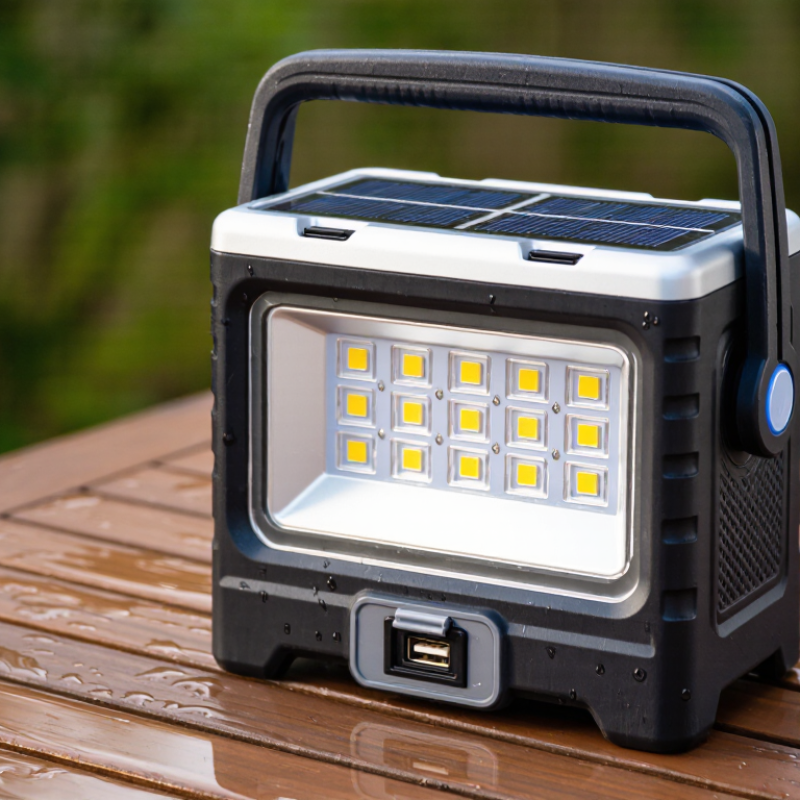
The best solar emergency light from China is not defined by price or brightness alone. It is defined by dependable performance when power disappears. In practical testing, I look for a stable beam, simple controls, and a battery that holds charge after repeated cycles. A useful model should light a small room for several hours, not only impress during a showroom demonstration. The solar panel also matters. It should charge reasonably under weak daylight, although cloudy weather will reduce output. No miracle claims.
Build quality reveals more than packaging. Check the housing seams, switch response, handle strength, and panel protection. An IP rating can indicate resistance to dust and water, but it should match the intended environment. Ask the Chinese supplier for battery specifications, charging time, runtime tests, safety documents, and sample inspection records. Independent testing is stronger than a sales statement. I would test three samples, charge them fully, and measure brightness at fixed distances. Results may vary. That is the uncomfortable part.
Tips: Test samples before bulk purchasing. Record charging time and usable runtime. Check performance after several charging cycles. Confirm compliance documents for your destination market, and avoid trusting printed claims without evidence. A lower-cost light may become expensive when its battery weakens quickly.
What Defines the Best Solar Emergency Light from China?
How to read this benchmark: The index compares practical quality factors on a 0–100 scale. A high-quality solar emergency light should combine strong illumination, long backup runtime, reliable weather protection, efficient solar charging, and durable battery performance.
The benchmark reference values are approximately 1,000–1,200 lumens, 12 hours of emergency runtime, IP65 protection under IEC 60529, an 8-hour full solar recharge under suitable sunlight, and around 1,000 battery cycles. Actual performance varies with battery capacity, solar conditions, temperature, and product design.
Choosing the best solar emergency light from China starts with practical testing, not attractive packaging. A reliable unit should provide stable brightness during power cuts. Check the lumen rating, but do not trust numbers alone. Measure useful light across a room, especially near the floor and doorway. A wide beam helps with movement, while a focused beam suits outdoor inspection.
Battery capacity directly affects runtime. Look for lithium battery details, charging time, and low-battery behavior. A lamp that dims gradually is safer than one that suddenly fails. Solar panels should still charge under weak daylight, although cloudy weather reduces performance. A USB charging option adds flexibility. It can matter during several rainy days.
Durability deserves close attention. An IP-rated housing offers better protection against dust and water, but the rating should match the test documentation. Inspect the switch, handle, panel joints, and cable ports. Cheap plastic may crack after repeated heat exposure. I have found that small design faults often appear before electrical problems. No model is perfect. Verify factory quality records, sample-test battery performance, and request clear safety documentation before bulk purchasing. A useful emergency light should also feel simple to operate at night, with raised buttons and visible charging indicators. Fancy modes are sometimes less valuable than dependable basic lighting.
| Evaluation Dimension | Recommended Benchmark | Why It Matters | How to Verify Before Purchase |
|---|---|---|---|
| Solar Panel Technology | Monocrystalline silicon panel with a stated rated power and charging current | Monocrystalline panels generally provide higher efficiency per unit of surface area than many conventional polycrystalline panels. | Request the panel wattage, open-circuit voltage, short-circuit current, and charging test conditions. |
| Battery Chemistry | Rechargeable lithium-ion or lithium iron phosphate battery with overcharge, over-discharge, and short-circuit protection | Battery chemistry affects service life, safety, weight, temperature performance, and usable capacity. | Check the battery type, nominal voltage, rated capacity in watt-hours, protection-circuit details, and safety test reports. |
| Lighting Output | A clearly specified lumen rating, preferably with multiple brightness modes | Lumens measure total visible light output more reliably than LED wattage alone. | Ask for test data based on measured lumens, not only the number of LEDs or nominal LED power. |
| Runtime | At least 6–8 hours at a practical medium brightness setting; longer runtime at low brightness | Emergency use often requires overnight illumination rather than short-duration maximum brightness. | Request runtime results at every brightness level and confirm the battery capacity used in the test. |
| Charging Options | Solar charging plus a USB input or other backup charging method | Cloudy weather, indoor placement, and winter conditions can limit solar charging. | Confirm input voltage, charging time, cable type, and whether the light can operate while charging. |
| Weather Resistance | Outdoor models should generally target at least IPX4; IP65 provides stronger protection against dust and water jets | An appropriate ingress-protection rating improves reliability during rain, dust, and outdoor storage. | Verify the exact IP test report and whether the rating applies to the complete assembled product. |
| Emergency Functions | Low-battery indicator, SOS or flashing mode, power-bank function, and optional automatic lighting | Additional functions can support evacuation, communication, and charging of essential small devices. | Test each mode independently and check whether emergency functions reduce available runtime significantly. |
| Light Quality | Color temperature around 3,000–6,500 K, depending on whether warm comfort or brighter task lighting is preferred | Color temperature influences visual comfort and the suitability of the light for indoor or outdoor tasks. | Request the color temperature, color-rendering information, beam angle, and lighting-distribution photos. |
| Durability and Materials | Impact-resistant housing, protected solar panel, corrosion-resistant hardware, and a stable handle or mounting point | Emergency equipment may be transported, dropped, or exposed to changing outdoor conditions. | Review material specifications, drop-test results, hinge strength, and sample inspection photos. |
| Safety Compliance | Applicable electrical, battery-transport, EMC, and environmental compliance documentation for the destination market | Compliance documentation helps reduce electrical, electromagnetic, transport, and market-entry risks. | Request current test reports from accredited laboratories and verify that the report matches the exact model. |
| Operating Temperature | A clearly stated operating and charging temperature range suitable for the intended region | Very high or low temperatures can reduce battery capacity, charging performance, and product life. | Check the product specification and confirm whether charging is restricted below freezing temperatures. |
| Maintenance and Replaceability | Cleanable panel surface, accessible instructions, and a defined battery or parts-support policy | Dust, snow, and battery aging can reduce performance over time. | Ask about replacement batteries, spare parts, warranty terms, and cleaning instructions. |
| Best Overall Selection Criteria | Balanced solar charging, verified battery safety, honest lumen and runtime data, suitable IP rating, and required certifications | The best emergency light is not necessarily the brightest; it should provide dependable illumination, safe charging, and practical endurance. | Compare samples using the same test conditions and prioritize independently verifiable specifications over marketing claims. |
The best Chinese solar emergency light depends on its intended use. For home power cuts, select a compact unit with steady light, simple controls, and a replaceable battery. A wide beam suits bedrooms and kitchens. A focused beam works better near stairways or entrances. Check the stated runtime at medium brightness, not only the highest setting. Brightness is not everything.
For farms, workshops, and remote shelters, durability matters more than appearance. Choose a larger panel, reinforced housing, and an IP rating suitable for dust or rain. Models with hanging hooks and adjustable panels are practical beside toolsheds. In field evaluations, charging speed changes sharply under clouds, dirty panels, or winter sunlight. Request test records for battery capacity, electrical safety, and ingress protection. Do not rely only on catalog figures.
For disaster kits, portability becomes the deciding factor. A hand-carry unit with USB charging can support phones when sunlight is limited. A radio, warning signal, or motion sensor may add value, but extra functions can increase failure points. One common mistake is choosing maximum brightness and ignoring battery aging. Another is assuming every imported unit has identical quality. Chinese factories offer flexible production and useful customization, yet supplier inspection remains essential. Confirm sample performance, spare-part access, charging temperature limits, and packaging before placing a large order. I would also test the light after three cloudy days. That practical check can expose optimistic specifications.
The best solar emergency light from China should pass safety checks before brightness tests. I inspect the battery compartment, cable joints, switch, and charging panel. No loose wire should appear. The enclosure should show an IP65 rating, tested under IEC 60529. IP65 means protection from dust and water jets, not permanent submersion. Small wording differences matter.
Battery evidence is essential. For lithium models, request IEC 62133-2 test records and UN 38.3 transport reports. These documents cover cell safety and transport testing, but they do not prove every finished lamp is safe. Ask for reports matching the exact model number. IEC 60598-1 testing can support luminaire safety, while RoHS documentation helps verify restricted-substance controls. Local Chinese compliance marks may not replace destination-market requirements. Check this carefully.
Durability needs measurable proof. Lighting Global and GOGLA reported about 9.3 million off-grid solar products sold globally in 2023. That scale increases the value of independent quality testing. Look for battery cycle data, charging time at weak sunlight, and runtime at the stated brightness. Test it cold. Test it after dust exposure. A lamp that shines brightly for one hour may fail during a long outage. My own practical mistake was trusting the printed runtime without testing reduced sunlight. Certifications build confidence, but traceable reports, realistic specifications, and physical inspection provide stronger evidence.
Choosing the right Chinese solar emergency light starts with your actual emergency needs, not the highest lumen number. A compact lamp may suit a hallway, while a larger unit can support a workshop or rural home. Check brightness, beam range, lighting modes, and runtime separately. A light claiming 12 hours may deliver less time at full power. Test it.
Inspect the solar panel size and charging performance under cloudy conditions. In many regions, weak winter sunlight changes the result dramatically. Select a rechargeable battery with clear capacity information and protection features. The housing should resist rain and dust, especially if you plan to mount it outdoors. Look for a suitable IP rating, sturdy switches, and a handle that does not feel fragile. Small details matter during a power cut.
Request product samples before placing a large order. Measure charging time, battery endurance, heat, and brightness with simple records. Ask the Chinese supplier for test reports, material details, warranty terms, and replacement-part support. Compliance documents should match your destination market, because one certificate may not cover every country. Communication quality is also evidence of reliability. If answers remain vague, pause. I once underestimated packaging strength, and several units arrived with cracked panels. That mistake was avoidable. A good selection balances performance, repairability, shipping protection, and realistic local weather conditions.