
What Are the Top 10 Solar Pathway Lights?
Solar Pathway Lights can turn a dark walkway into a safer, more welcoming route, without adding wiring along the garden edge. The right set can softly mark steps, borders, and driveway turns. The wrong set may fade before midnight or struggle beneath a shaded tree. Small details matter.
This guide introduces ten popular options and the features worth comparing. It considers brightness, light color, battery capacity, construction, and weather resistance, while recognizing that product specifications vary. A high lumen figure alone does not guarantee an appealing path; spacing and beam direction affect how evenly the ground is lit. A warm glow may suit a quiet garden, while cooler light can make paving easier to see.
Sun exposure is crucial. A panel receiving several hours of direct daylight will usually charge more effectively than one tucked beneath thick branches. Cloudy weather and shorter winter days can also reduce runtime. That matters. Before choosing, check the manufacturer’s charging and operating guidance, then consider your climate and layout.
The ranking is a starting point, not a universal verdict. A light that works beautifully beside a sunlit stone path might disappoint along a narrow, shaded walkway. Reviews and specifications can help, but neither tells the whole story. Sometimes the simplest design is best. This overview aims to show where each option may fit, what trade-offs to watch for, and which practical details deserve a closer look before you buy.
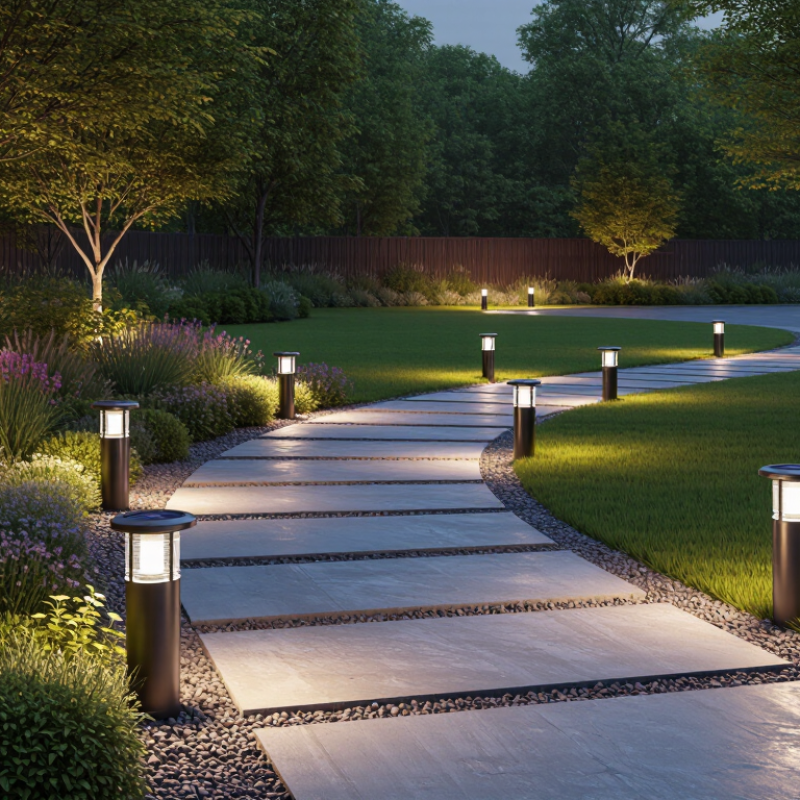
What Solar Pathway Lights Are and How They Work
Solar pathway lights are self-contained outdoor fixtures that mark a walkway without a wired connection. A small photovoltaic panel converts daylight into electricity and charges a rechargeable battery. At dusk, a light sensor switches on the LEDs; at dawn, it turns them off. Small, but clever. Most units combine the panel, battery, sensor, and lamp in one stake-mounted housing, so placement matters as much as the hardware.
LEDs make this compact setup practical. The U.S. Department of Energy reports that LEDs use at least 75% less energy and can last up to 25 times longer than incandescent lighting. Still, a small panel cannot store sunshine that never reaches it. NREL’s PVWatts model estimates solar output using local weather and system conditions, underscoring why shade, panel angle, and seasonal daylight affect charging. A fixture beneath a dense shrub may glow briefly, even if its packaging promises a long runtime. Place lights where panels receive direct daytime sun, and keep them clear of leaves and dirt. Cloudy weeks can still mean dimmer paths. That limitation is easy to overlook.
What Are the Top 10 Solar Pathway Lights? — What Solar Pathway Lights Are and How They Work
Solar pathway lights are outdoor fixtures that collect sunlight with a photovoltaic panel, store energy in a rechargeable battery, and use it to power an LED after dark. A light sensor usually switches the LED on at dusk and off at dawn or when the battery runs low.
| Type of Solar Pathway Light | Typical Light Output | Typical Nightly Runtime | How It Works / Main Feature | Best Suited For |
|---|---|---|---|---|
| Standard stake light | About 2–10 lumens per light | About 6–10 hours after a full charge | A small solar panel charges an internal battery during daylight; a dusk sensor switches on the LED. | Marking garden paths and borders |
| High-output pathway light | About 10–30 lumens per light | About 4–8 hours, depending on brightness and sunlight | Uses a brighter LED and typically needs more stored energy than a decorative low-output light. | Brighter guidance along frequently used paths |
| Decorative lantern-style light | About 2–10 lumens per light | About 6–10 hours after a full charge | A housing or patterned diffuser softens and decorates the LED light; the solar and battery system works like a standard stake light. | Garden accents and patios |
| Clear-lens pathway light | About 5–20 lumens per light | About 5–9 hours, depending on the model | A clear or focused lens directs more of the LED’s light toward the ground than a strongly diffusing cover. | Visible path edges and small changes in level |
| Motion-activated pathway light | Often about 20–100 lumens while active | Varies; the LED runs when motion is detected | A motion sensor triggers a brighter LED for a limited period, helping conserve battery energy between activations. | Entrances and areas where light is needed on demand |
| Dusk-to-dawn bollard light | About 10–50 lumens per fixture | Typically designed for several hours of nightly operation; actual runtime varies | A taller, often wider fixture spreads light around the path; its light sensor turns it on automatically at dusk. | Driveway edges and wider walkways |
| Adjustable-panel pathway light | About 5–30 lumens per light | About 5–10 hours with adequate charging | An adjustable panel can be aimed toward stronger sunlight, while the LED head can often be directed toward the path. | Partly shaded gardens or locations with limited panel exposure |
| Remote-panel pathway light | About 5–30 lumens per light | About 5–10 hours with adequate charging | A separate solar panel connects to the light by a cable, allowing the panel to sit in a sunnier spot. | Shaded paths where the fixture itself receives little sun |
| Color-changing pathway light | Usually about 2–10 lumens per light | About 5–9 hours, depending on mode and charge | Colored LEDs or a color-filtering cover provide decorative light; color modes may affect perceived brightness. | Decorative garden borders and outdoor gatherings |
| Wall- or step-mounted solar light | About 5–30 lumens per light | About 4–10 hours, depending on brightness and sunlight | Mounts to a vertical surface or step rather than a stake; an integrated panel charges the battery when exposed to sunlight. | Steps, low walls, and narrow routes where stakes are unsuitable |
Figures are broad, indicative ranges for common consumer designs, not guaranteed specifications. Actual brightness and runtime depend on the model, battery condition, panel placement, season, weather, and hours of direct sunlight. Solar lights generally charge less on cloudy days and in shaded locations.
Related Posts
-
China Best Solar Pathway Lights Manufacturer?
-
Best Rechargeable LED Flashlight for Global Buyers in 2026?
-
Why Is a COB Work Light Essential for Global Buyers?
-
Why Choose a Solar Motion Sensor Light?
-
How to Choose the Best Solar Powered Street Lights for Your Needs?
-

2026 Best Emergency Work Light for Global Buyers Insights?