7 Solar Rechargeable Headlamp Buying Tips for Buyers
A Solar Rechargeable Headlamp can look simple on a product page: a bright beam, a small solar panel, and a promise of power outdoors. Real use is less tidy. A shaded campsite, winter daylight, or a panel left behind glass can change how much energy reaches the battery. Buyers should compare verified runtime, charging options, beam settings, fit, and weather resistance—not rely on a big lumen number alone.
The International Energy Agency’s Renewables 2024 report says solar photovoltaic power accounted for about three-quarters of renewable capacity added worldwide in 2023. That growth supports the wider appeal of solar charging, but it does not prove that a small headlamp panel will recharge quickly. Energy-sector expert Fatih Birol, Executive Director of the IEA, said in its Renewables 2023 report: “The world is set to add more renewable power in the next five years than it has in the past 100 years.” The forecast offers useful context, not a product test. That distinction matters.
For a practical purchase, inspect battery capacity, USB backup charging, charge indicators, and independent runtime claims. Check whether the lamp stays comfortable after an hour, and whether its controls work with cold fingers. Small details matter. A solar feature may be helpful, but it is not a substitute for a dependable battery. The following seven buying tips focus on what product specifications can—and cannot—tell you before you choose.
Assess Your Lighting Needs and Intended Use
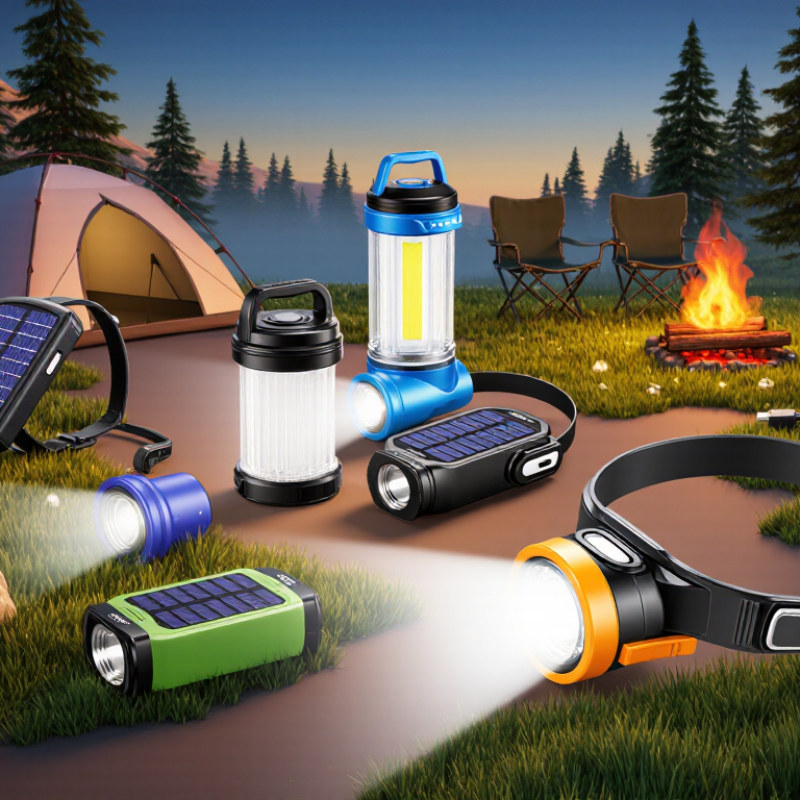
Start by picturing the task, not the headlamp. A campsite cook may need a wide, even beam to see food and gear nearby. A night hiker may need a focused beam to spot uneven ground farther ahead. For repairs, check whether the lamp can point steadily at your hands. Match the beam pattern and brightness to the distance you actually use.
Tips: List your likely tasks, then estimate how long each one takes. Check the stated runtime at the brightness setting you expect to use; maximum brightness can drain a battery quickly. Consider fit, too. A headlamp that slips when you bend over becomes irritating fast.
Think about where charging will happen. A solar panel may help during a sunny, multi-day trip, but shade and cloudy weather can slow charging. Treat sunlight as a useful backup, not a guaranteed refill. Check whether the lamp also supports another charging method, and whether its weight feels comfortable after several hours. I might choose a lighter lamp for short evening walks, even if it gives up some runtime. That trade-off is easy to overlook.
Compare Solar Charging and Backup Power Options
Solar charging can extend a headlamp’s runtime, but it is rarely a dependable sole power source. NREL’s National Solar Radiation Database (NSRDB) provides solar irradiance data by location and time, reflecting how sunlight changes with season and conditions. A small panel facing a cloudy sky, or tilted away from the sun, may add little charge during a short break. Check the maker’s stated charging time under clear sunlight, then treat it as an estimate, not a guarantee.
Compare the backup option as carefully as the solar panel. A built-in rechargeable battery is convenient, while a replaceable cell or external USB power input can help when sunlight is limited. Confirm the supported input and battery capacity; “USB rechargeable” does not automatically mean fast charging. For an overnight hike, test the lamp at your usual brightness and bring a compatible backup. I still find this easy to overlook: maximum brightness drains stored power much faster.
Tip: Place the panel in direct sun while you pause, not inside a pack or under a jacket. Keep a charged backup available for nightfall. If the product gives no charging conditions or runtime details, compare another model before buying.
Solar Rechargeable Headlamp Buying Tips: Compare Charging and Backup Power
Solar charging can be useful when sunlight is available, but output varies with panel size, weather, and angle. For a practical backup, check whether the headlamp can also charge by USB. The chart shows idealized minimum times for a 7.4 Wh battery (about 2,000 mAh at 3.7 V), calculated as battery energy divided by input power: 1 W solar, 5 W USB, and 10 W USB. Real charging takes longer because of conversion losses and changing conditions; actual specifications vary by product.
Evaluate Battery Capacity, Runtime, and Light Output
A solar-rechargeable headlamp’s battery label needs context. Compare watt-hours, not just milliamp-hours: a 3.7-volt, 2,000-mAh battery stores about 7.4 watt-hours before conversion losses. Then check runtime at the brightness you will actually use. ANSI/PLATO FL 1-2019 defines runtime as the time until output falls to 10% of its initial level. That matters. A lamp may stay on for hours while becoming too dim for trail markers or close-up repairs. Ask for test conditions and runtime by light mode; otherwise, the number is hard to compare.
Lumens describe total light output, but beam shape determines what reaches your work or path. A wide beam helps with nearby tasks; a focused beam can reveal distant obstacles. Look for independently tested output, runtime, and beam distance under the ANSI/PLATO method, rather than relying on a peak-lumen claim alone. Solar charging adds another variable. NREL’s PVWatts model estimates solar production using location, weather, and system losses, illustrating why a small panel’s recharge time changes with shade and season. In practice, treat sunlight as a useful top-up, not a guaranteed overnight recharge. I would check the lamp after a dim afternoon, too; specifications rarely capture every real-world disappointment.
Check Comfort, Durability, and Weather Resistance
A solar-rechargeable headlamp can look sturdy on a product page and still feel awkward after an hour. Check the strap for a soft, adjustable band that stays put when you bend or turn your head. If possible, try it over a cap or hood. The lamp should sit close to your forehead without pressing hard on your skin. Small details matter. A stiff buckle can become irritating on a long walk.
Durability is more than a thick-looking shell. Look for secure seams, covered charging ports, and controls you can find with gloves on. A firm button is useful, but it should not need a painful press. Consider how the lamp will be carried: loose in a tool bag, or protected in a case? Solar charging can be convenient, though it may be slow in shade or cloudy weather. I once assumed a sunny window would recharge a light quickly; it did not. Treat solar power as one charging option, not a guarantee.
Weather resistance deserves a closer look. Check the maker’s published water-resistance rating and what conditions it covers. “Water-resistant” alone is vague. Rain, splashes, and brief exposure are not the same as submersion. Inspect the port cover for a snug fit, and make sure it closes without forcing it. A headlamp used around wet trails or a dripping tent needs protection that matches those conditions, not just reassuring wording on the packaging.
Compare Controls, Safety Features, and Overall Value
A solar-rechargeable headlamp should be easy to operate before you judge its brightness. Check whether the power button and mode control feel distinct, especially when you are wearing gloves. A single button can be simple, but cycling through several settings in the dark may become annoying. Small detail. Big difference. Look for a clear battery indicator, and test whether the lamp starts in a useful mode rather than flashing unexpectedly.
Safety features matter most when the light is used near roads, on trails, or during a power outage. A rear red light can help others spot you, while a stable, adjustable headband keeps the beam from bouncing as you walk. Check that the lamp does not become uncomfortably hot during extended use. Water resistance is useful, but read the stated rating carefully; “weather-resistant” alone does not tell you how much rain it can handle. I would not assume that a solar panel can refill a depleted battery quickly. Sunlight, angle, and cloud cover all affect charging.
Compare overall value by weighing verified runtime, charging options, comfort, and replaceable battery access against the price. Solar charging is a helpful backup, not always a dependable daily power source. If possible, check the runtime at the brightness level you will actually use; maximum-output claims can obscure shorter practical run times. A lower-priced lamp may be enough for short tasks, while longer outings call for clearer battery information and a dependable USB charging option. The trade-off is not always obvious.