10 Hunting Headlamp Buying Tips for Global Buyers
Choosing a Hunting Headlamp is not just about chasing the highest lumen number. Global buyers need to compare beam distance, battery life, weather resistance, comfort, and dependable controls. A bright beam can look impressive on a product page, yet feel harsh when it reflects off wet leaves or fog. Small details matter.
This guide offers ten practical buying tips for comparing models across different markets. Check whether the light provides a useful low mode, whether its beam can be adjusted with gloves, and whether its battery system suits your intended trips. Look closely at charging options, weight, strap stability, and clear product specifications. A headlamp that works well during a short test may behave differently after hours outdoors in cold or damp conditions.
Product claims deserve careful reading. Lumens alone do not explain how long a lamp sustains its output, and advertised water resistance does not replace clear test details. Compare the manufacturer’s specifications with independent reviews, and confirm that replacement batteries or compatible chargers are available where you shop. There is no perfect model. Some buyers may prefer a lighter lamp; others may value longer runtime or a wider beam.
A named expert quotation was not supplied, and I cannot verify one here. I will not invent a quote or attribute it to a real person. That caution reflects the guide’s central principle: judge a Hunting Headlamp by verifiable performance, practical fit, and the conditions in which you expect to use it.
Define Your Hunting Environment and Headlamp Requirements
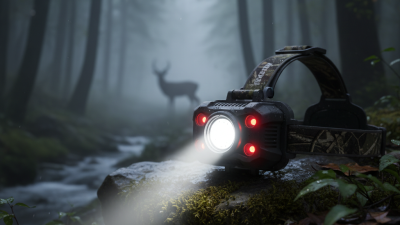
Define the terrain before choosing brightness. Dense woodland needs a controlled beam that reveals nearby roots without washing out the whole scene. Open fields or ridgelines call for more reach, but a narrow spot can hide hazards at your feet. Consider whether you will walk, set up, or handle small equipment in the dark. Small details matter. Rain, fog, and low temperatures can also change what feels comfortable. Check whether the strap stays secure over a cap and whether the buttons are easy to find with gloves.
Then set practical requirements for beam shape, runtime, weight, and controls. A dim mode helps with close tasks and can preserve night adaptation better than using full output continuously. For longer outings, compare usable runtime at the brightness you will actually use, not only the maximum setting.
Cold weather can reduce battery performance, so test the light outdoors with spare power available. Test it outdoors. It is easy to overestimate how much brightness you need and overlook glare, neck strain, or fiddly controls. That trade-off deserves a second look before buying.
Compare Brightness, Beam Distance, and Lighting Modes
Global buyers should compare measured brightness, beam distance, and lighting modes—not lumen claims alone.
Lumens describe total light output, while beam distance shows how far a beam reaches under a defined test. A wide flood can reveal nearby ground, straps, or brush, but may not reach a distant trail marker. A focused beam travels farther, yet can leave your peripheral view dim. The best balance depends on terrain and how long you need to scan.
Tip:
Match the beam to the task. Choose a broad setting for close work and a focused setting for spotting distant details. Check whether switching modes is easy with gloves. A low setting can preserve night vision and reduce battery drain; a flashing mode may be less useful than steady light during routine movement.
For comparable figures, consult the ANSI/PLATO FL 1-2019 testing standard. It measures beam distance to the point where light falls to 0.25 lux, and defines runtime until output drops to 10% of its initial level. These figures help buyers compare products, but they are not a promise of identical results in cold weather or with different batteries. One detail is easy to overlook: a long-range beam can look impressive on paper and still feel tiring up close. Try to judge the beam pattern, not just its headline number.
Evaluate Battery Life, Power Options, and Weather Resistance
Battery life matters most when a hunt runs longer than planned. Compare runtime at the brightness level you will actually use, not only the manufacturer’s lowest setting. Cold weather can reduce battery performance, so a headlamp that lasts six hours indoors may not last as long on a frosty ridge. Check whether the battery is replaceable or rechargeable. A spare cell can be useful, but only if it stays dry and warm in your pack. Small detail. Test the lamp before leaving home.
Power options affect convenience in the field. Rechargeable models reduce the need to carry disposable batteries, while replaceable cells can be easier to swap when charging is unavailable. Some lamps support both, which adds flexibility but may increase weight or complexity. Check the charging port and battery compartment for secure covers. A loose seal is easy to overlook during a quick gear check. Also consider how the controls work with gloves; tiny buttons can be frustrating when your hands are cold.
Weather resistance deserves careful reading. Look for a clearly stated water-resistance rating, and understand what it covers: rain, splashes, or temporary immersion are not the same conditions. A sealed headlamp can still fail if its battery door is not closed properly. Inspect the gasket for grit or damage, especially after dusty trips. I would not treat any rating as permission to ignore care. Dry the lamp after wet use, and avoid storing it with damp batteries. Even dependable gear has limits.
Check Comfort, Controls, and Compatibility with Hunting Gear
A hunting headlamp should stay secure when you look down, turn, or step over uneven ground. Try it with the cap, hood, or ear protection you normally wear. A band that feels comfortable indoors may pinch after an hour. Check for pressure across the forehead and slipping at the back. Small adjustments matter.
Controls should be easy to identify by touch, especially with light gloves. Practice switching modes before heading out. Can you dim the beam without cycling through several settings? Are the buttons far enough apart to avoid accidental presses? Keep the operation simple. Tiny controls can frustrate cold fingers, even when the lamp works well.
Compatibility goes beyond the head strap. Check whether the lamp sits securely around your usual headwear and leaves room for other essential gear. Look at battery access, cable routing, and how the housing moves when you tilt your head. A bulky lamp may catch on a hood or feel unbalanced. There is no perfect fit for every setup, and a quick indoor test will not reveal every issue. Still, wearing the full kit for a short walk can expose pressure points before they become annoying.
Verify Safety Standards, Supplier Reliability, and Total Cost
A dependable hunting headlamp starts with evidence, not a bright product photo. Ask for safety test reports that match the exact model, battery type, and production version you plan to buy. Check whether the test covers electrical safety, heat, and water resistance, and confirm the standards are accepted in your destination market. A report for a similar model is not enough. I would not treat a polished brochure as proof.
Supplier reliability is harder to judge from a first email. Request a production sample and compare its beam, switch feel, strap stitching, and battery fit with the approved specification. Ask how the supplier handles failed units, replacement parts, and changes to components. Check recent references and production capacity, too. Small inconsistencies matter. A sample can be excellent while a later batch differs; this is easy to overlook.
Compare total cost, not just the unit price. Include freight, import charges, packaging, inspection, spare batteries, warranty handling, and likely replacements. A lower quote may become expensive if delivery slips or support is slow. Request a written breakdown with lead times and payment terms. Then compare suppliers on the same assumptions. It takes longer. Still, a clear landed-cost estimate is more useful than a bargain that leaves important costs unstated.
Hunting Headlamp Buying Tip: Check the IP Water-Protection Rating
IEC 60529 defines the water-protection tests represented by these IP code digits. Check the specific rating claimed for a headlamp and request test documentation from the supplier. The digits identify different test conditions; they are not a linear measure of protection.
Buyer note: IPX7 indicates temporary immersion under specified test conditions (commonly up to 1 m for 30 minutes). It does not by itself establish resistance to water jets; verify the exact tests covered by the product’s rating.