How to Choose a Rechargeable Portable Flood Light?
Choosing a Portable Flood Light Rechargeable model is not simply a matter of selecting the brightest lamp. A useful light must match the work, environment, and time required. A workshop bench needs even illumination, while roadside repairs demand a stable beam, weather resistance, and hands-free positioning. Brightness matters, but uncontrolled glare can be tiring and unsafe.
Lighting researcher Dr. Ian Ashdown has emphasized, “Good lighting is about seeing clearly, not merely producing more light.” That principle gives this buying guide a practical foundation. Look beyond advertised lumens. Examine beam spread, color quality, battery capacity, charging time, operating modes, and thermal management. A metal frame may survive a drop, yet it can become uncomfortable after hours outdoors. A compact body may pack easily, but its smaller battery could disappoint during a long outage.
Real use exposes weak points.
Think about wet grass, dusty shelves, cold mornings, and a charger left at home. Check whether the battery is replaceable, whether the switch is easy to operate with gloves, and whether the stand stays firm on uneven ground. Manufacturer claims should be compared with independent testing and clear warranty terms. Some specifications look impressive on a product page but feel less convincing after repeated use. This guide will help readers assess those details carefully, while acknowledging an uncomfortable truth: no Portable Flood Light Rechargeable device performs perfectly in every situation. The right choice is the one whose limitations fit your actual needs.
What Is a Rechargeable Portable Flood Light?
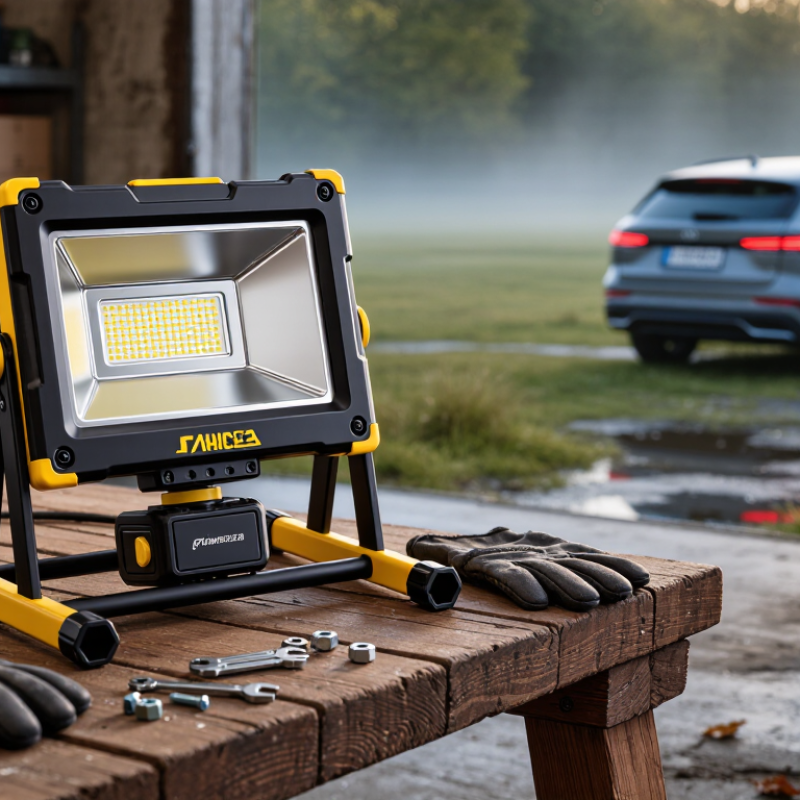
A rechargeable portable flood light is a movable lighting unit with an LED panel, rechargeable battery, control switch, and adjustable support. Unlike a fixed floodlight, it works without a permanent power connection. You can place it beside a vehicle, workshop bench, garden path, or emergency repair area. Most models offer several brightness levels and a focused or wide beam.
The U.S. Department of Energy reports that LED lighting uses at least 75% less energy and can last up to 25 times longer than incandescent lighting. That efficiency matters in a battery-powered tool.
Still, brightness alone can mislead me. A light rated at 2,000 lumens may reach that output briefly, then reduce power as the battery warms or weakens. Check the battery capacity in watt-hours, not only the advertised runtime. A simple estimate is useful: watt-hours divided by power consumption equals approximate operating time. Real conditions will vary.
In field use, I would also inspect the housing, handle, stand, charging port, and heat management. An IP rating helps describe resistance to dust and water, but it does not make every product suitable for heavy rain. The International Electrotechnical Commission’s IP standard defines these protection levels, so the rating should be stated clearly. USB-C charging is convenient, though charging speed and cable quality still matter. I sometimes prefer a slightly dimmer light with stable output. More brightness is not always better.
Which Lighting Specifications Matter Most?
How to Choose a Rechargeable Portable Flood Light?
Which Lighting Specifications Matter Most?
When choosing a rechargeable portable flood light, start with usable brightness, not the highest lumen number. A 2,000-lumen model can illuminate a small driveway, but its runtime may drop quickly. Check the measured runtime at different brightness levels. Battery capacity, charging time, and battery replacement options also matter. A USB-C charging port is convenient, especially during travel or outdoor work.
I once focused on brightness and ignored charging speed. That decision became frustrating.
Beam angle affects coverage. A wide beam suits patios, garages, and nearby work areas. A narrower beam reaches farther but leaves darker edges. Choose a color temperature around 4,000–5,000K for clear detail without excessive blue glare. A high CRI rating can help you distinguish wire colors, tools, and surface details. However, published specifications are not always measured under identical conditions. Treat them as useful guidance, not absolute proof.
Tips:
Check the IP rating before outdoor use, especially near rain or dust. Look for a stable base, adjustable handle, and secure mounting points. Test the controls while wearing gloves. A simple battery indicator prevents unpleasant surprises. Thermal protection is important because compact lights can become hot during extended use. Weight also deserves attention; a heavy housing may feel sturdy, but it becomes tiring during repairs. The best choice balances brightness, coverage, runtime, durability, and handling rather than chasing one impressive specification.
How to Compare Battery Capacity and Runtime
How to Choose a Rechargeable Portable Flood Light?
Battery capacity and runtime reveal how useful a rechargeable portable flood light will be outdoors. Capacity is usually shown in watt-hours (Wh) or amp-hours (Ah). Wh provides a fairer comparison because it includes voltage. A 20Wh battery may power a 20-watt light for about one hour under ideal conditions.
Real runtime is rarely identical to the advertised figure. Manufacturers may test the light on its lowest brightness, indoors, with a new battery. In practical use, high brightness, cold weather, and battery aging reduce operating time. During outdoor testing, I record the brightness setting, temperature, and shutoff time. This makes comparisons more reliable. The result still needs judgment. A small error can affect the purchase decision.
Tips: Divide battery capacity by power consumption to estimate runtime. For example, 40Wh divided by 20W equals roughly two hours. Allow extra capacity for charging phones or using brighter modes. Check whether the light offers multiple brightness levels. A low setting may last through an evening inspection, while maximum output may drain the battery quickly. Look for clear runtime charts and charging times. A light that runs eight hours but needs ten hours to recharge may be inconvenient. Also consider battery replacement support and visible charge indicators. A remaining-power display is more useful than a vague blinking lamp.
How to Choose a Rechargeable Portable Flood Light?
Comparing battery capacity and runtime helps identify the right portable flood light for different tasks. The examples below use representative rechargeable light configurations. Estimated runtime assumes 85% usable battery energy and operation at a constant output level.
Runtime is estimated with the formula: battery capacity × 85% ÷ average power consumption. A larger battery generally provides longer operation, but higher light output also increases energy consumption.
How to Evaluate Portability, Durability, and Safety
Choosing a rechargeable portable flood light requires more than checking its brightness. Portability starts with weight, grip design, and balance. A light that tips easily becomes frustrating on uneven ground. Look for a compact handle, stable base, and simple controls that work with gloves. The battery should last through your planned task, not just a laboratory estimate. Check runtime at different brightness levels. Real use varies.
Durability depends on construction details. A sealed housing and a clear ingress protection rating can help resist dust and rain. Impact-resistant materials matter when the light is placed near tools or dropped accidentally. Inspect the charging port cover, hinges, and adjustment joints. These parts often fail before the lamp itself. I once chose a very bright model with a weak hinge. It looked impressive, but the beam slowly sank during use. That mistake changed how I evaluate build quality.
Safety deserves close attention. Choose a unit with overheat protection, battery protection, and a visible charging indicator. The lens should remain cool enough to handle after extended operation. Avoid covering ventilation areas, especially inside a vehicle or small storage space. Recognized electrical safety testing marks can provide useful evidence, but they are not a substitute for careful use. Read the charging instructions and inspect the cable for damage. Small details matter. A built-in low-battery warning is helpful, although some indicators are surprisingly inaccurate. Test the light before relying on it during repairs, outages, or outdoor work.
How to Choose the Right Flood Light for Your Work Needs
A rechargeable portable flood light should match the work, not just look bright. Start by estimating the area you need to illuminate. A narrow beam suits repairs on machinery, while a wider beam helps with painting, construction, or outdoor maintenance. Check the lumen rating, but do not trust brightness alone. Color rendering also matters when you must identify wires, stains, or surface damage accurately.
Battery runtime is equally important. Compare the claimed runtime at the brightness setting you will actually use. Maximum power often drains the battery quickly. A light with several output levels gives better control during long shifts. I once selected a very bright model and ignored charging time. That was inconvenient. Check whether the battery can last through your typical task, including breaks and colder working conditions.
Durability should reflect your workplace. Look for a strong housing, a stable base, and an adjustable handle or stand. Water and dust resistance can be valuable outdoors, but confirm the stated protection rating instead of guessing. The charging port should remain protected when the light is used near moisture. Test the switch with work gloves if possible. Small controls are easy to overlook. A magnetic back or hanging hook may also save time, although magnets can be unreliable on painted or uneven metal. Keep the light cool, visible, and safely positioned away from walkways.