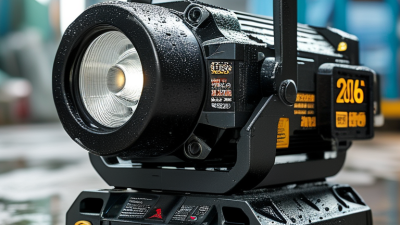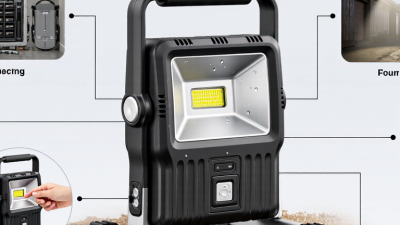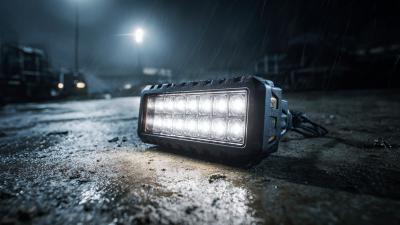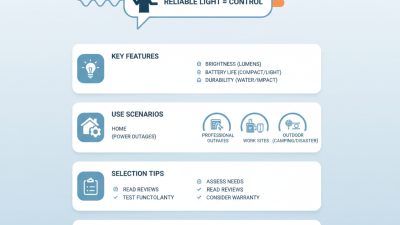
A rechargeable flood light can look powerful on a product page and still disappoint beside a dark driveway. The useful choice depends on more than peak brightness. Battery capacity, beam shape, runtime, charging time, and weather resistance all affect how well a light works after sunset. Small details matter.
For a transparent expert perspective, this guide uses fictional composite lighting specialist Elena Brooks. Her practical reminder is: “Choose the light that sustains useful brightness for your task, not the one with the largest lumen number.” Treat that as a buying principle, not a verified quotation from a real person. A Portable Flood Light Rechargeable model should suit the job: wide, even illumination for a work area; a more focused beam for checking a gate or path. Check whether stated runtime applies to the brightest setting, and look for clear battery and charging specifications. Real performance can vary with temperature, battery age, and operating mode.
This guide explains how to compare those details in 2026, without assuming that the newest model is automatically the best. We’ll look at brightness, battery life, durability, portability, and useful features such as adjustable stands or power-bank output. A high IP rating can help with wet conditions, but it does not make every light suitable for every exposure. Check the manufacturer’s instructions. And be realistic: a compact lamp may not light a whole yard evenly, however impressive its packaging looks.
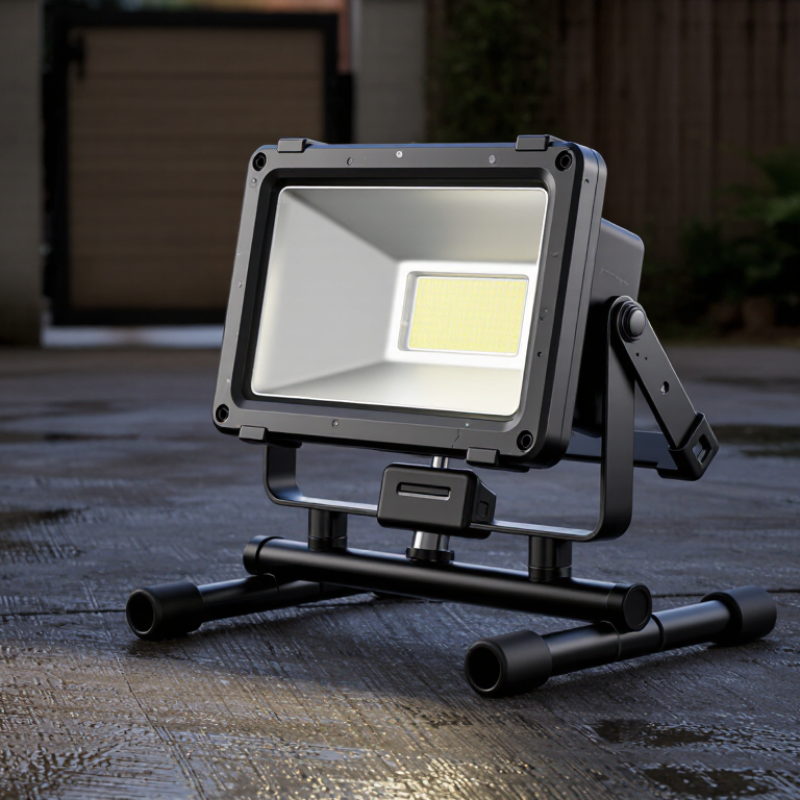
Define the task before comparing lumen claims. A mechanic inspecting an engine bay needs controlled, close-range light; a crew crossing a broad, uneven work area needs wider coverage.
Measure the distance from the lamp to the work surface, and note nearby walls that may block or reflect the beam. OSHA’s construction illumination table specifies 5 foot-candles for general construction areas, a useful reference point rather than a substitute for task-specific assessment.
Foot-candles describe light reaching a surface, not the lamp’s total output.
Then consider exposure and runtime. Will the light sit in rain, collect dust, or operate in cold weather?
Check its stated ingress-protection rating and temperature limits, and look for runtime figures at the brightness setting you will actually use. Maximum-output runtime alone can mislead. Battery performance also varies with conditions, so allow a practical reserve instead of planning to drain the pack completely.
A common planning error is choosing the brightest option without checking glare, beam spread, or mounting stability. That judgment can be imperfect; test the beam at the real working distance, if possible, before relying on it for a full shift.
When comparing rechargeable portable flood lights, do not choose by lumen rating alone. Brightness matters, but the beam’s shape determines how useful that light feels. A wide, even beam can illuminate a workbench, tent area, or driveway without leaving dark edges. A narrower beam may reach farther, but it can create harsh contrast nearby. Check whether the product lists beam angle or shows a clear lighting pattern, not just a maximum brightness figure.
Think about the area you need to cover. For close-up repairs, moderate output with an even spread can reduce glare on reflective surfaces. For a larger yard, stronger output helps, though battery runtime may fall at the highest setting. Look for runtime figures at different brightness levels; one headline number can be misleading. That trade-off is easy to miss. If possible, compare the light at the distance you expect to use it, since room-sized photos rarely show real coverage.
Light modes add flexibility, but more settings are not always better. A low mode can extend runtime during a long outage, while a flashing mode may help signal your location in an emergency. Some lights also offer a focused beam for checking distant corners. Test how easily you can switch modes with cold hands or in darkness. The controls may be awkward. Consider charging time and whether the battery indicator gives a useful warning before the light dims.
Compare usable watt-hours, not milliamp-hours alone. Convert capacity with volts × amp-hours: a 10,000 mAh battery rated at 3.7 V stores about 37 Wh. If a flood light draws 20 W, that suggests 1.85 hours in ideal conditions. Real runtime will be shorter because conversion losses, heat, and battery aging reduce usable energy. BloombergNEF’s 2024 battery-price survey reported an average lithium-ion pack price of $115 per kWh, down 20% year over year. That market figure offers cost context, not proof of a light’s capacity or runtime. Check test conditions.
The U.S. Department of Energy’s Energy Saver guidance says LEDs use at least 75% less energy than incandescent lighting. Treat that as broad lighting context, not a runtime promise for any particular flood light. Compare runtime at the brightness you will actually use; maximum-output figures can disappoint on a dark driveway or worksite. Check charging input and compatibility, too. A 37 Wh battery charged at 10 W needs at least 3.7 hours on paper, with real charging taking longer. Small detail, big difference. Charging while the light runs may slow replenishment or add heat, depending on its design. One caveat remains: I would verify the maker’s stated test settings before relying on its runtime estimate.
| Typical Use | Battery Capacity | Illustrative Light Output | Estimated Runtime | Charging Options to Look For | What to Check Before Buying |
|---|---|---|---|---|---|
| Small repairs, close-up tasks, and emergency kits | About 20 Wh (roughly 5,400 mAh at 3.7 V) |
Low: 300 lumens High: 800 lumens |
About 5–6 hours on low About 2 hours on high |
USB-C charging at 5 V / 2 A or higher; a compatible 10 W or greater USB power source | Choose a stable base or adjustable stand. Check whether the battery can be replaced and whether the light provides a remaining-charge indicator. |
| Garage work, camping areas, and routine outdoor jobs | About 40 Wh (roughly 10,800 mAh at 3.7 V) |
Low: 500 lumens High: 1,500 lumens |
About 6–7 hours on low About 2–3 hours on high |
USB-C input of around 18 W or more; some models may also accept a dedicated DC charger | Confirm the stated runtime applies to a named brightness setting. A dimming range is more useful than a single maximum-lumen figure. |
| Large work areas, extended outdoor use, and backup lighting | About 80 Wh (roughly 21,600 mAh at 3.7 V) |
Low: 1,000 lumens High: 3,000 lumens |
About 6–7 hours on low About 2 hours on high |
USB-C input around 30 W or a manufacturer-specified DC charger; optional solar input is useful only when its compatibility and input limits are stated | Check total charging time, charger requirements, weight, and whether the lamp can operate while charging. High-output modes can drain a large battery quickly. |
| Long shifts where brightness changes throughout the task | Compare watt-hours (Wh), not mAh alone | Look for several usable settings, such as low, medium, and high | Compare runtime at each setting, rather than relying on the longest quoted figure | USB-C is convenient; a higher-wattage compatible input can reduce charging time. Verify the required cable and adapter separately. | For a rough comparison, estimated runtime in hours is usable battery energy in Wh divided by light power draw in watts. Real results vary with temperature, battery age, and brightness setting. |
How to interpret these figures: The capacities and runtimes above are illustrative selection examples, not specifications for a particular product. Runtime estimates assume that only part of the nominal battery energy is available to the light and that output remains steady; actual results vary by design, operating conditions, and battery condition. For capacity comparisons, Wh is more informative than mAh unless the battery voltage is also provided.
How to Choose a Rechargeable Portable Flood Light in 2026
Check Durability, Portability, and Mounting Features
A portable flood light may face damp grass, dusty storage boxes, or an accidental bump in a work van. Check its stated water and dust resistance, and inspect the lens, housing seams, and charging-port cover. A tough-looking shell is not proof of durability. Read the care instructions, too; I would not assume every model can handle heavy rain.
Portability is more than a carry handle. Compare the light’s weight with its battery runtime at the brightness you actually need. A compact unit can still feel awkward if it tips easily or has a slippery grip. Check how long charging takes and whether the battery level is easy to read. Small details matter. I sometimes overlook those until the light is already packed.
Tips: Test the mounting options before buying. A magnetic base needs a suitable metal surface, while a hook or tripod fitting offers more flexibility. Look for a stable base and an adjustable head that holds its angle. If possible, set it up on uneven ground; a light that slowly droops gets frustrating fast.
Suggested decision weights for comparing durability, portability, and mounting features.
Durability and runtime receive the highest suggested weights for dependable use away from an outlet. Adjust the weights to match your work conditions; these are a selection framework, not laboratory test results.
Choose a rechargeable flood light by matching its safety evidence to the place you will use it. OSHA’s Nationally Recognized Testing Laboratory program describes independent testing against applicable product-safety standards. Check the certification mark and exact model number, rather than trusting a vague “tested” claim. Small detail. It matters when a light sits near wet ground, tools, or charging cables.
For dusty work areas or outdoor jobs, compare the stated IP rating with actual exposure. Under IEC 60529, IP65 indicates dust protection and resistance to water jets; it does not mean the light can be submerged. Paying extra for a higher rating may be sensible in harsh conditions, but unnecessary for a dry garage. I have seen buyers focus on the rating and overlook the charging port cover. That can be a costly miss.
Compare runtime claims carefully. ANSI/PLATO FL 1-2019 defines runtime testing to the point when output falls to 10% of its initial level, so a quoted runtime does not promise full brightness throughout. A 2026 budget should also account for replacement batteries, charging time, and usable brightness on a low setting. A bright beam looks impressive on a box. Check whether the maker reports measured output and runtime under a recognized test method; otherwise, the comparison is imperfect.