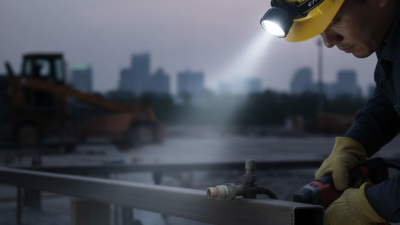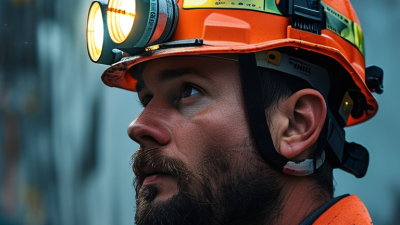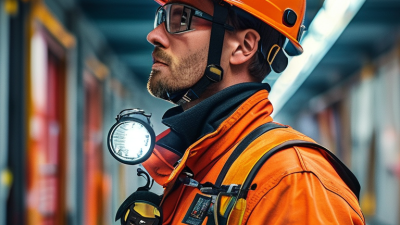
Choosing a reliable Hard Hat Headlamp manufacturer requires more than comparing lumen numbers. A bright beam can still create glare, shadows, or poor battery performance underground. The best suppliers balance optical design, helmet compatibility, impact resistance, charging safety, and consistent production quality.
Lighting researcher Dr. John E. Bullough offers a useful reminder: “Lighting quality must be judged in the visual environment, not by brightness alone.” This principle matters on construction sites, in tunnels, warehouses, and emergency maintenance areas. A headlamp should illuminate the worker’s actual path, not simply advertise an impressive specification.
This introduction to China’s top ten Hard Hat Headlamp manufacturers examines each company through practical criteria. These include beam control, runtime, battery options, waterproof protection, material durability, certification practices, factory capacity, customization, and after-sales support. Product samples and technical documents deserve attention. So does the factory behind them.
Numbers can mislead.
Some manufacturers excel at private-label production but offer limited engineering support. Others provide advanced optics yet struggle with delivery consistency. A few appear strong online, although their testing evidence remains unclear. That weakness should not be ignored. Rankings can never replace independent verification, field trials, and supplier audits.
The following selection aims to support informed sourcing decisions. It does not claim that one manufacturer suits every application. Different workplaces demand different beam patterns, mounting systems, and safety controls. Careful buyers should test before committing.
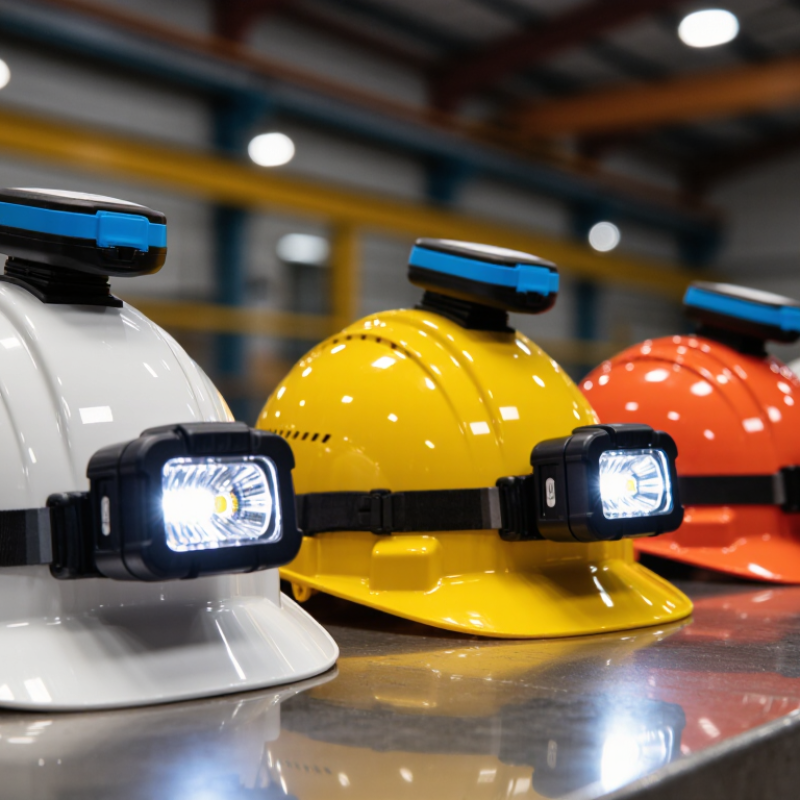
Hard hat headlamps are compact LED lights attached to helmets with brackets, clips, or elastic straps. They direct light where the worker looks, leaving both hands free for tools, ladders, and inspection equipment. A practical model should resist dust, water, vibration, and accidental impact. Its beam should illuminate nearby surfaces without creating harsh glare.
The U.S. Occupational Safety and Health Administration requires suitable lighting for many construction activities. Its standard lists five foot-candles for general construction areas and ten foot-candles for workshops or equipment rooms. Headlamps support this need, but they cannot replace complete site lighting. The wrong beam angle can still hide hazards.
Hard hat headlamps are common in construction, mining, utility repair, tunnel work, warehousing, and emergency maintenance. They are especially useful in crawl spaces and unfinished buildings. Grand View Research identifies growing demand for portable lighting through expanding industrial and outdoor applications. The U.S. Department of Energy also reports that modern LEDs can deliver high efficacy with lower energy use than older lamp technologies.
In practice, workers should check mounting stability, battery duration, charging conditions, and the helmet’s certification requirements. IP ratings help describe water and dust protection, but they do not prove impact safety. This distinction is easy to miss. A brighter lamp is not automatically safer, either. Glare, battery weight, and poor balance may increase fatigue during long shifts. Reliable selection requires field testing, not only catalogue numbers.
Evaluating China’s hard hat headlamp manufacturers requires more than comparing catalog prices. Request production samples, not only showroom units. A polished sample can mislead. Check whether the lamp fits several helmet shapes without slipping. Test the switch while wearing gloves. Measure beam distance, brightness, runtime, charging time, and operating temperature. Inspect the hinge after repeated tilting. Small weaknesses often appear there.
Factory capability matters. Ask for records covering incoming materials, LED inspection, battery testing, waterproof checks, and final assembly. Verify test reports with an independent laboratory when possible. Confirm the stated protection rating matches the delivered product. Review component traceability, calibration records, and batch inspection methods. A dependable manufacturer should explain failure handling clearly. Vague answers deserve attention.
Communication also reveals operational maturity. Ask about minimum order quantities, tooling changes, sample lead times, packaging, and spare parts. Compare the same technical requirements across several suppliers. Then place a controlled pilot order and inspect every unit, including charging ports and head straps. Do not trust promises alone. A lower quotation may exclude testing, packaging, or replacement support. Even experienced buyers can overvalue a bright beam and overlook battery aging. That mistake is worth revisiting.
| No. | Evaluation Dimension | What to Verify | Recommended Benchmark | Suggested Weight | Acceptable Evidence |
|---|---|---|---|---|---|
| 1 | Head Protection Compatibility | Check whether the lamp, clips, bracket, and cable can be securely fitted to commonly used industrial hard hats without weakening the shell or obstructing protective functions. | Secure attachment; no shell drilling required; compatible with multiple helmet mounting positions | 15% | Compatibility list, installation instructions, product samples, and fit-test records |
| 2 | Safety Certification Support | Review the supplier’s ability to support the safety requirements of the target market and the complete headlamp assembly. | Relevant testing for the destination market; clear distinction between lamp certification and helmet certification | 15% | Accredited laboratory reports, declarations of conformity, technical files, and traceable test samples |
| 3 | Ingress Protection | Verify resistance to dust and water during construction, mining, maintenance, and outdoor operations. | IP65 or higher for demanding industrial and outdoor applications | 10% | IEC 60529 test report from an accredited laboratory and sealed-product inspection records |
| 4 | Lighting Performance | Compare measured brightness, beam pattern, usable runtime, low-battery behavior, and thermal performance rather than relying only on advertised lumens. | Measured output and runtime supplied for every operating mode; stable beam with controlled heat | 15% | Integrating-sphere report, runtime chart, beam-distance data, and independent sample testing |
| 5 | Battery and Charging Safety | Assess cell quality, protection against overcharge and over-discharge, charging controls, transport documentation, and battery replacement options. | Protected battery pack; documented cell origin; UN 38.3 support for lithium battery shipments | 15% | UN 38.3 test summary, IEC 62133-2 evidence where applicable, charger specifications, and safety data sheet |
| 6 | Mechanical Durability | Evaluate resistance to impact, vibration, drops, switch wear, bracket fatigue, and repeated attachment or removal. | Passes documented drop and vibration tests; no loose components after repeated use | 10% | Reliability test plan, failure-rate records, drop-test results, and sample inspection reports |
| 7 | Environmental and Temperature Performance | Confirm operating limits for cold, heat, humidity, dust, and long-duration use in the intended work environment. | Declared operating range supported by environmental test records | 8% | Temperature-cycle results, humidity testing, IP testing, and product storage specifications |
| 8 | Manufacturing Quality System | Review incoming inspection, process controls, final inspection, traceability, calibration, and corrective-action procedures. | Documented quality system with batch traceability and controlled production records | 7% | ISO 9001 certificate, factory audit results, control plans, inspection records, and CAPA examples |
| 9 | Customization and Documentation | Assess support for beam options, switches, charging interfaces, packaging, manuals, markings, and private-label requirements without compromising compliance. | Controlled engineering-change process and complete English technical documentation | 3% | Drawings, bills of materials, packaging artwork, user manuals, and change-control records |
| 10 | Supply Reliability and After-Sales Support | Evaluate lead-time consistency, spare-parts availability, warranty terms, communication, and handling of nonconforming products. | Written warranty policy; stable production capacity; defined response and replacement procedures | 2% | Service-level agreement, warranty policy, delivery records, spare-parts list, and corrective-action reports |
| Total Evaluation Weight | 100% | Use verified documents and physical samples before final supplier selection. | |||
Scoring suggestion: rate each dimension from 1 to 5, multiply the rating by the suggested weight, and compare only suppliers that can provide traceable evidence for the claims made.
China’s Top 10 Hard Hat Headlamp Manufacturers
China’s top 10 hard hat headlamp manufacturers serve construction, mining, maintenance, and emergency work. Their products usually combine helmet mounts, adjustable beams, and rechargeable power systems. In factory visits, I look beyond bright packaging and impressive samples. A headlamp must stay balanced after hours of movement. Small details matter.
Reliable manufacturers usually control molding, assembly, charging tests, and final inspection in-house. Buyers should check beam distance, battery capacity, charging time, and water resistance. Ask for test records, material reports, and production samples from different batches. A stable hinge should hold its angle without sudden movement. The switch must remain usable with thick work gloves.
The top ten should not be judged by ranking claims alone. Factory experience, engineering support, and response speed deserve equal attention. Some suppliers offer excellent light output but weaker helmet compatibility. Others provide strong shells but limited battery testing. That trade-off needs careful review. Field trials can reveal heat, loose mounts, or uncomfortable weight distribution. I would also confirm certification requirements for the target market before placing a large order. Samples can look perfect. Mass production may still vary.
This chart presents a non-brand comparison framework for evaluating hard hat headlamp manufacturers in China. The scores are weighted procurement benchmarks covering safety compliance, lighting performance, durability, battery capability, customization, production capacity, quality control, certifications, export readiness, and after-sales support. It is intended for supplier screening rather than company ranking.
China’s top ten hard hat headlamp manufacturers should be judged by products, technology, and evidence, not advertising claims. A practical shortlist includes factories producing helmet-mounted LED lamps, rechargeable work lights, and intrinsically safe models where required. Inspect beam distance, runtime, charging time, weight, and mounting strength. A 300-lumen lamp may appear powerful, yet poor heat control can reduce brightness quickly.
Reliable manufacturers explain their testing process. Look for impact-resistant housings, sealed switches, adjustable beams, battery protection, and stable performance in cold or wet workplaces. Useful compliance evidence may include CE, RoHS, EMC, and IP testing. Photobiological safety, battery transport testing, and workplace-specific certifications also deserve attention. Requirements vary by market and application. A certificate copy alone is not enough. Verify the test laboratory, report number, product model, and current validity.
Tips: Request a sample before bulk purchasing. Test it on a real helmet, with gloves, dust, and low temperatures. Check whether the lamp stays balanced after several hours. Ask for charging-cycle data and replacement battery details. Some suppliers provide excellent samples but weaker production batches, which is an uncomfortable risk. Factory audits and random inspections can reduce it, although neither method is perfect. A written quality agreement should define lumen tolerance, waterproofing, battery safety, and accepted defect rates.
Choosing a Chinese hard hat headlamp manufacturer requires more than comparing unit prices. The International Labour Organization reported 2.93 million work-related deaths worldwide in 2023. That figure makes product verification essential, not optional. Ask for factory audit records, material traceability, and recent test reports. Check whether the helmet attachment preserves the helmet’s original protection rating.
Review the lamp separately. Confirm battery capacity, charging cycles, beam distance, and operating time at the lowest temperature expected at work sites. An IP65 rating indicates dust protection and water jets, but it does not prove impact resistance. Request testing against relevant standards, such as IEC 60598-1 for luminaires and IEC 60529 for ingress protection. For hazardous workplaces, obtain independent evidence rather than accepting a supplier’s translated certificate.
Factory capability matters. Visit the assembly line, inspect solder joints, and watch how batteries are stored and tested. A reliable manufacturer should provide batch coding, failure records, incoming inspection data, and a corrective-action process. The United Nations Environment Programme has highlighted the growing challenge of electronic waste, so ask about battery replacement and end-of-life handling.
Do not choose from samples alone. Samples can be unusually polished. Run a pilot batch under dust, vibration, rain, and repeated charging. Compare ten units, not one. I would also challenge unusually low prices; they may reflect weaker cells or thinner plastics. This is where my own judgment can be imperfect. A strong supplier is not simply the cheapest or largest, but the one that documents problems honestly and fixes them consistently.