Top 10 Solar Security Lights to Buy in 2026?
Choosing a Solar Security Light for 2026 means balancing brightness, dependable operation, and practical installation—not simply picking the highest lumen rating. A light may look powerful on a product page yet perform poorly when its panel receives little direct sunlight. Battery capacity, motion-detection range, sensor settings, and weather resistance all influence everyday results. Small details matter.
This guide introduces ten solar security lights worth comparing, with attention to their stated features and likely use cases. A compact model may suit a side gate, while a multi-head fixture can spread light across a driveway or wider entrance. Before buying, check the manufacturer’s specifications, installation requirements, warranty terms, and current customer feedback. Ratings and performance claims can vary, and real results depend on placement, season, and local conditions.
The right choice should fit the area you need to illuminate, the amount of sunlight available, and your comfort with installation. Look for adjustable heads and motion settings if you need to direct light toward a path rather than a neighbor’s window. Brightness alone is not the whole story. It is easy to overlook charging time until cloudy days arrive; I would treat that as a real trade-off, not a minor footnote. These lights can improve nighttime visibility, but they are not a substitute for broader home-security measures. The picks ahead offer a starting point, not a promise that every model will suit every property.
What Solar Security Lights Are and How They Work
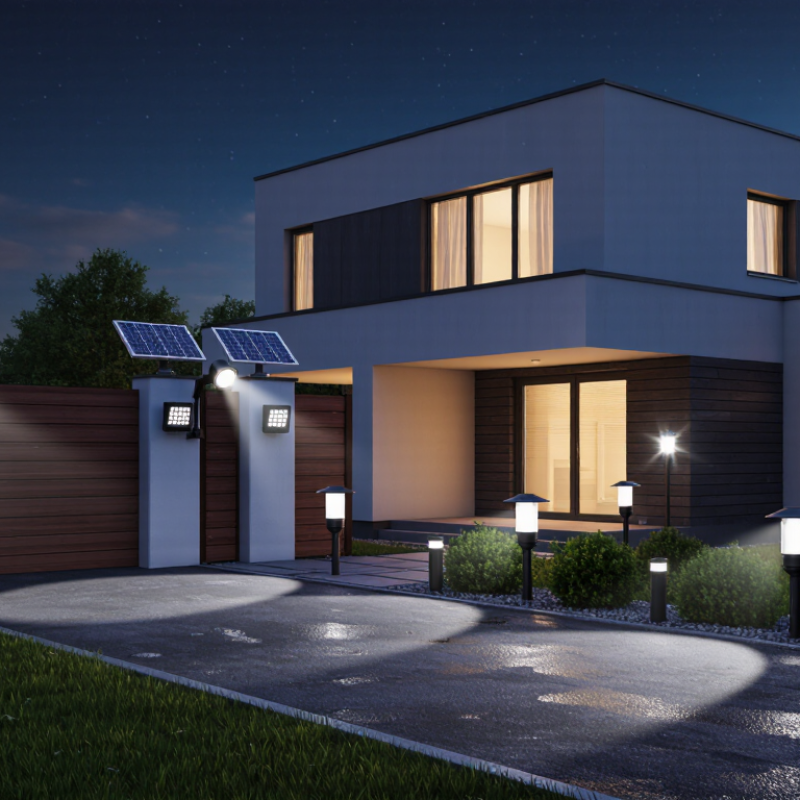
Solar security lights combine a photovoltaic panel, a rechargeable battery, a motion sensor, and LED lamps. During daylight, the panel converts sunlight into electricity and stores it in the battery. After dusk, a light sensor typically enables the system. When the motion sensor detects a change in nearby heat, it signals the LEDs to switch on. Some models stay dim until movement occurs; others remain off. The exact behavior depends on the design.
Placement affects performance more than many buyers expect. A panel shaded by a roof edge or tree may collect too little energy, even if the lamp itself faces a driveway. Check the recommended panel angle, battery capacity, detection range, and weather-resistance rating before choosing a light. For example, a unit above a garage may need a wider sensor angle than one illuminating a narrow garden path. Keep the panel clean, too. Dust is easy to overlook. On short winter days or during several cloudy nights, runtime can fall, and brighter settings may drain the battery faster. Solar lighting is convenient, but it is not a guarantee of steady output in every season.
How to Evaluate Solar Security Lights for 2026
Choosing a solar security light starts with the area you need to cover. Check the stated brightness, motion-sensing distance, and beam angle, then compare them with your actual driveway or doorway. A wide beam may leave nearby corners dim. Very bright output can also create glare for neighbors or passing drivers.
Battery capacity and panel placement matter just as much. Look for clear information about charging time and expected runtime, especially after several cloudy days. A small panel tucked under an eave may struggle to recharge the battery. That detail is easy to miss. Check whether the panel can face direct sunlight, and whether the light allows separate panel mounting. In winter, shorter days may change performance; advertised runtime is not a guarantee for every site.
For outdoor use, review the weather-resistance rating and the manufacturer’s stated operating temperatures. Consider adjustable motion sensitivity, shutoff timing, and brightness settings, since overly sensitive sensors can trigger repeatedly. Read warranty terms and replacement-battery guidance before buying. A spec sheet can still mislead. If possible, compare independent test results and user reports from similar climates, while treating individual experiences cautiously. The best choice is the one whose coverage, charging needs, and controls fit your property—not simply the one with the biggest lumen number.
Top 10 Solar Security Lights to Consider in 2026
The top 10 solar security lights to consider in 2026 are best judged by layout, not brightness claims alone. Look for twin-head motion lights for driveways, wide-angle floodlights for yards, and separate-panel designs for shaded walls. Dusk-to-dawn models suit paths, while adjustable heads help direct light away from windows. Compact entryway units, weather-sealed fixtures, replaceable-battery designs, and multi-mode lights round out a practical shortlist. Small details matter.
Check the battery capacity, panel placement, sensor range, and stated runtime. A bright beam is less useful if the panel sits under an eave or winter clouds drain the battery. The U.S. Department of Energy says LEDs use at least 75% less energy and last up to 25 times longer than incandescent lighting. That comparison supports efficient light sources, but it does not guarantee a particular fixture’s runtime.
IRENA’s Renewable Power Generation Costs in 2023 report found utility-scale solar’s global weighted-average electricity cost fell 12% that year, to USD 0.044 per kilowatt-hour. That is encouraging context, not a price forecast for small outdoor lights.
I would rank products cautiously without verified test results; published brightness figures rarely show how evenly a wet path is illuminated. Check the return policy, battery replacement options, and sensor behavior before buying.
Comparing Brightness, Coverage, Battery Life, and Features
A useful 2026 comparison should look beyond headline lumen ratings. Lumens measure total light, not how well a fixture covers a gate, path, or driveway. Check beam angle, sensor range, and mounting height together; a bright, narrow beam can leave the steps dark. The U.S. Department of Energy says LEDs use at least 75% less energy and can last up to 25 times longer than incandescent lighting. That matters for solar fixtures, where efficient LEDs can stretch stored energy. Still, lumen figures alone cannot predict real-world visibility.
Battery life needs context. Ask whether the stated runtime assumes full charge, continuous lighting, or brief motion-triggered bursts. The DOE’s Energy Saver guidance notes that outdoor solar lights need sunlight to charge, so shade and seasonal daylight can reduce performance. A panel under a porch roof may look tidy. It may also charge poorly. Compare panel position, battery capacity, charging time, and replacement access, then check whether the sensor offers adjustable sensitivity and shutoff duration. I would treat advertised runtimes as best-case estimates unless testing conditions are clear. Small details matter: a sensor aimed at passing traffic may trigger all night, while a wide beam may illuminate more ground but feel less intense at the doorway.
How to Choose and Install the Right Solar Security Light
Top 10 Solar Security Lights to Buy in 2026?
How to Choose and Install the Right Solar Security Light
Start with the site, not the advertised lumen number. A narrow driveway needs a focused beam; a wide yard needs broader coverage. Check the motion sensor’s range and angle, then test them from the paths people actually use. Look for a weather-resistant rating, such as IP65, and a replaceable battery if available. Small details matter.
Sunlight determines whether the light can recharge reliably. NREL’s National Solar Radiation Database provides hourly solar and weather data, useful for comparing local conditions across seasons. Keep the panel clear of rooflines, branches, and winter shade. Aim it toward the equator, and follow the fixture’s installation instructions. A few hours of weak winter sun can change performance dramatically.
Mount the unit firmly at the height recommended by its manufacturer, then walk through the detection area after dark. Adjust the sensor to avoid repeated triggers from passing traffic or moving branches. The U.S. Department of Energy reports that LEDs use at least 75% less energy and can last up to 25 times longer than incandescent lighting. That supports choosing an efficient LED, but it does not guarantee a solar fixture’s runtime. Battery capacity and cloudy-day performance still deserve scrutiny. I’d check both before buying.