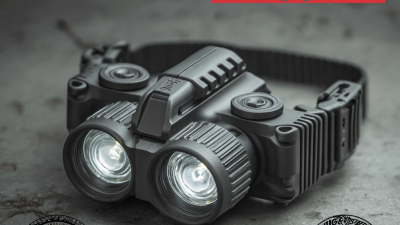
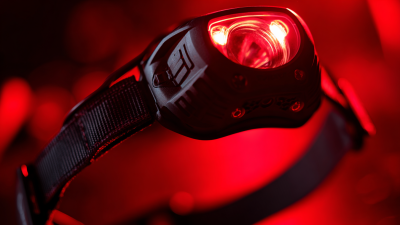
How to Choose the Best Red Light Headlamp for Your Needs?
When choosing the best Red Light Headlamp, you need to consider various factors. This tool serves multiple purposes, from camping to emergency situations. Understanding your specific needs will directly influence your decision. Different activities may require different light intensities or beam patterns.
Red Light Headlamps offer unique advantages. They preserve night vision while providing illumination. This is essential for tasks that need stealth, like wildlife observation or hunting. However, not all options on the market deliver the same performance. Some models may lack durability or battery life.
It's crucial to research reliable brands. Look for products with positive reviews and expert recommendations. Consider the headlamp's weight and comfort, especially for extended use. This can make or break your experience. Remember, a well-informed choice often leads to better outcomes. Balancing quality and your specific needs can take time, but it’s worth the effort.
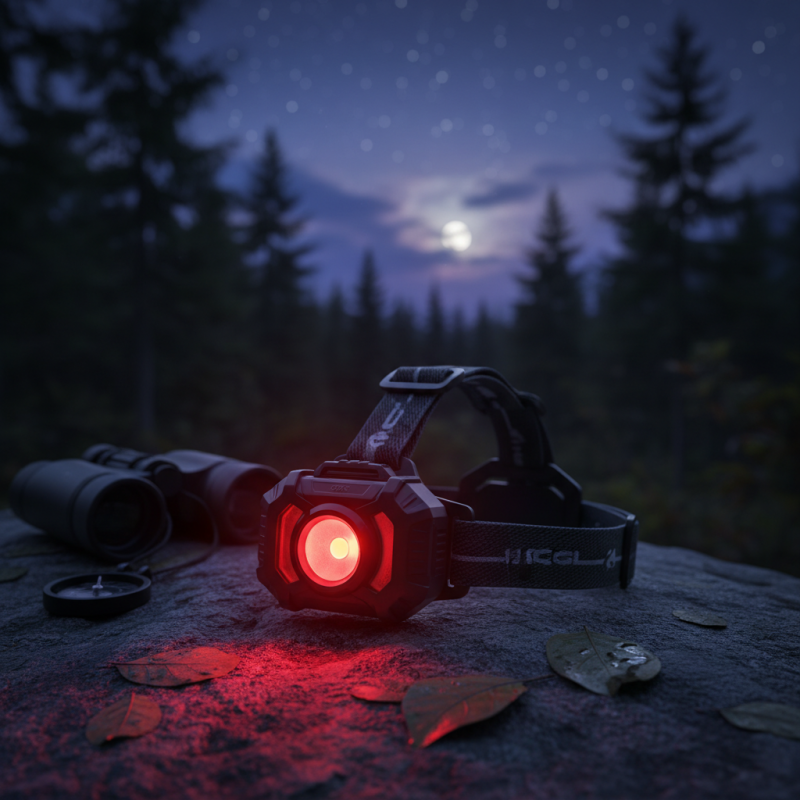
Factors to Consider When Choosing a Red Light Headlamp
When selecting a red light headlamp, consider the brightness levels. You want versatility in settings. This can help you adjust to different environments. A lamp with multiple brightness options is beneficial in many situations. Check the lumen output, as it indicates overall brightness.
Battery life is another crucial factor. A longer-lasting battery means you can rely on your headlamp for extended periods. Rechargeable options are more environmentally friendly and cost-effective. However, consider the charge time. If it takes too long, you might find yourself in the dark unexpectedly.
Tips: Look for a headlamp with a red light mode. This feature helps preserve your night vision. Choose a lightweight option for comfort. A good fit is vital for ease of movement.
Lastly, think about the durability. Your headlamp should withstand various conditions. Check if it’s waterproof or resistant to impacts. Reflect on how often you will use it. Frequent outdoor activities require a more robust design.
How to Choose the Best Red Light Headlamp for Your Needs? - Factors to Consider When Choosing a Red Light Headlamp
| Feature |
Importance |
Recommended Value |
| Brightness (Lumens) |
High brightness for visibility |
50-200 lumens |
| Battery Life |
Duration of use on a single charge |
10-30 hours |
| Weight |
Comfort during prolonged use |
Lightweight (150g or less) |
| Water Resistance |
Durability in wet conditions |
IPX4 or higher |
| Beam Distance |
How far the light travels |
30-100 meters |
| Red Light Modes |
Different settings for various situations |
Multiple (at least two modes) |
| Adjustable Beam |
Versatility in light focus |
Yes |
Understanding Different LED Technologies in Headlamps
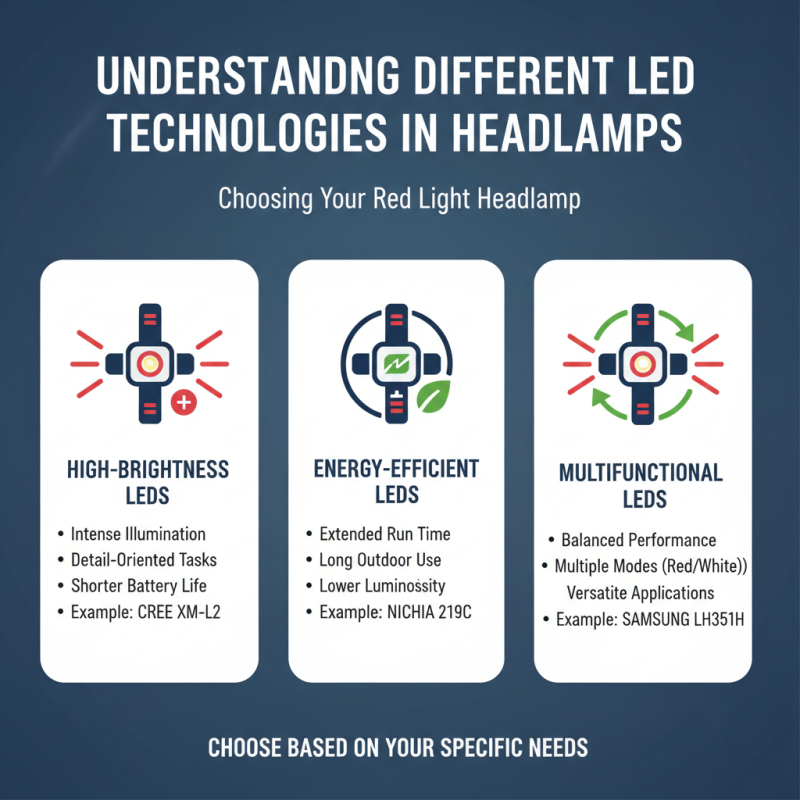
When selecting a red light headlamp, understanding the LED technologies available is crucial. LED lights are classified into various types, each offering unique benefits and drawbacks. For instance, some LEDs provide high brightness, making them suitable for detailed work. Others focus on energy efficiency, extending battery life during long outdoor excursions. The choice often depends on your specific lighting requirements.
Red LEDs are particularly popular for preserving night vision. This is vital for activities like stargazing or wildlife observation. However, not all red light headlamps employ the same LED technology. Some might emit a more intense red light, which can be unsettling to wildlife. Finding the right balance is key; you want illumination without scaring off your surroundings.
Another consideration is the lamp's beam pattern. Some headlamps deliver a wide, diffuse beam for broad coverage. Others provide a focused beam that reaches farther but can cause eye strain with prolonged use. Experimenting with different beam patterns can help identify what works best for you. Always reflect on your needs and preferences to make the most informed choice. It’s easy to overlook these details, leading to frustration later.
Battery Life and Runtime: Key Metrics for Headlamp Performance
When selecting a red light headlamp, battery life and runtime are crucial metrics to consider. A headlamp’s performance heavily relies on how long it can operate on a single charge or set of batteries. Typically, models vary significantly in this respect. Some may offer just a few hours of illumination, while others can last for days. It's essential to analyze your intended use. Longer excursions may demand a headlamp with extended battery life.
Rechargeable options often promise convenience. However, they may not perform as well in extreme temperatures compared to alkaline batteries. Durability can also play a role in overall efficiency. It's important to recognize that running out of power during an adventure can be frustrating. Sometimes, manufacturers may overstate battery life, making actual performance a vital consideration.
Evaluate runtimes for different settings. Many headlamps have various brightness levels. Higher settings drain the battery more quickly, leading to unpredictable runtimes. It might be wise to choose a model that balances brightness with efficiency. A headlamp should fit within your needs and expectations. Researching user experiences can provide valuable insights. Sometimes, real-world usage reveals flaws not mentioned in specs. Consider how often you will recharge or replace batteries to ensure it meets your demands.
Battery Life and Runtime Comparison for Red Light Headlamps
This bar chart compares the battery life and runtime of several hypothetical red light headlamps, showcasing how different models perform in terms of battery longevity.
Red Light Output Specifications and Their Importance
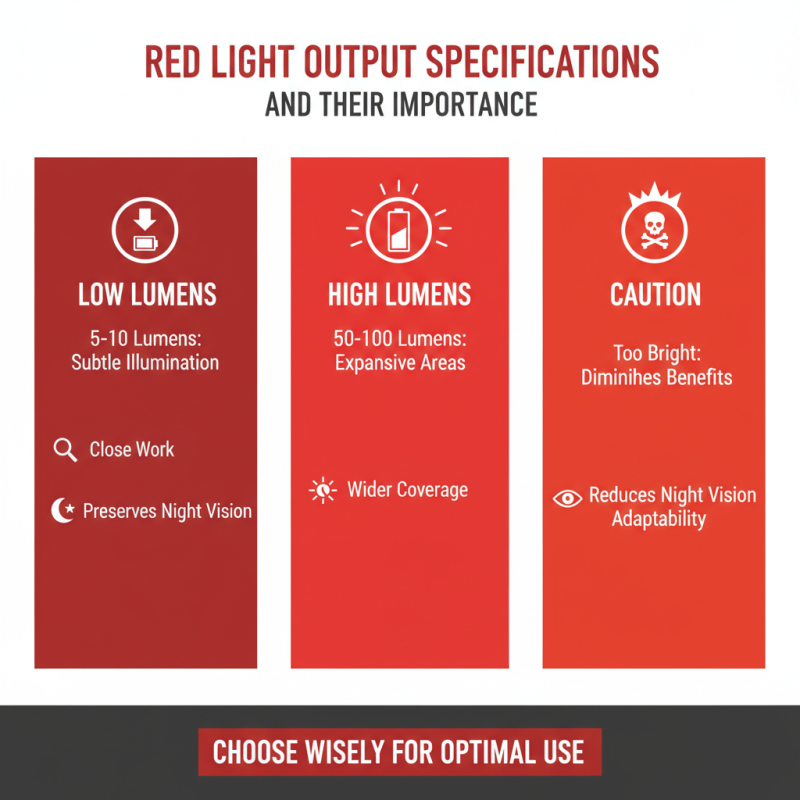
When considering a red light headlamp, understanding the output specifications is crucial. The intensity of red light measured in lumens can significantly impact your experience. A lower lumen output, like 5-10, offers subtle illumination. This is ideal for close work or preserving night vision. In contrast, higher outputs, around 50-100 lumens, are more suitable for expansive areas. However, excessive brightness can diminish the benefits of red light.
Different wavelengths of red light, typically between 610-680 nanometers, are worth noting. Certain wavelengths penetrate deeper into the skin, which is beneficial for therapeutic purposes. Conversely, the wrong wavelength may yield fewer advantages. It’s essential to examine the spectrum provided by manufacturers. Some may exaggerate the effectiveness of their products without solid evidence.
Testing various models can help identify the best fit for your needs. Comfort and battery life are just as important as light output. Even with the right specifications, a poorly designed headlamp can lead to discomfort. Take time to reflect on your specific requirements. Consider how often you'll use the headlamp and for what tasks. Balancing output, comfort, and design will ensure a more fulfilling experience.
Applications of Red Light Headlamps in Various Industries
Red light headlamps have become essential tools across various industries. In the medical field, they help preserve night vision during procedures. Surgeons and nurses can work in dim environments without disturbing patients. This feature enhances focus while minimizing glare.
In outdoor adventures, red light headlamps serve unique functions. They protect the night vision of star gazers and wildlife observers. Campers appreciate their discreet nature, as they do not startle animals nearby. However, some users might struggle to find that perfect brightness. Experimentation is often needed to strike a balance between visibility and preservation of night vision.
Moreover, in the field of photography, these headlamps can aid in low-light situations. Photographers can adjust settings without losing sight of their subjects. This approach allows for creativity in dark environments. Yet, it may take time for individuals to adapt to the nuances of using red versus white light. Understanding these aspects is vital for anyone considering purchasing a red light headlamp.