How to Choose the Best Hard Hat Headlamp?
Choosing the best Hard Hat Headlamp is not simply about finding the brightest model. A reliable light must fit securely, balance comfortably, and survive demanding work conditions. On a dark construction site, a loose lamp can swing across your vision while climbing stairs or inspecting overhead wiring. Small details matter.
This guide examines beam distance, brightness, battery performance, mounting systems, weight, and weather resistance. It also considers helmet compatibility, because not every Hard Hat Headlamp fits every shell or accessory slot. Always check the manufacturer’s instructions and applicable workplace requirements before purchasing. Product labels can be confusing, and advertised performance may change with battery type, temperature, or operating mode.
Real-world use reveals more than a specification sheet. A focused beam may help with distant inspections, while a wide floodlight works better inside cabinets or narrow service areas. Rechargeable batteries reduce waste, but disposable cells can be more practical during long shifts without power access. Neither option is perfect. That deserves honest consideration.
I have learned that comfort often matters more than maximum brightness. A heavy lamp may feel acceptable for ten minutes, then strain the helmet after several hours. Glare can also become a problem on reflective surfaces. The best choice depends on your tasks, environment, helmet design, and maintenance habits. This article will help you compare those factors carefully and select a Hard Hat Headlamp that supports safer, clearer work. Test the fit before relying on it.
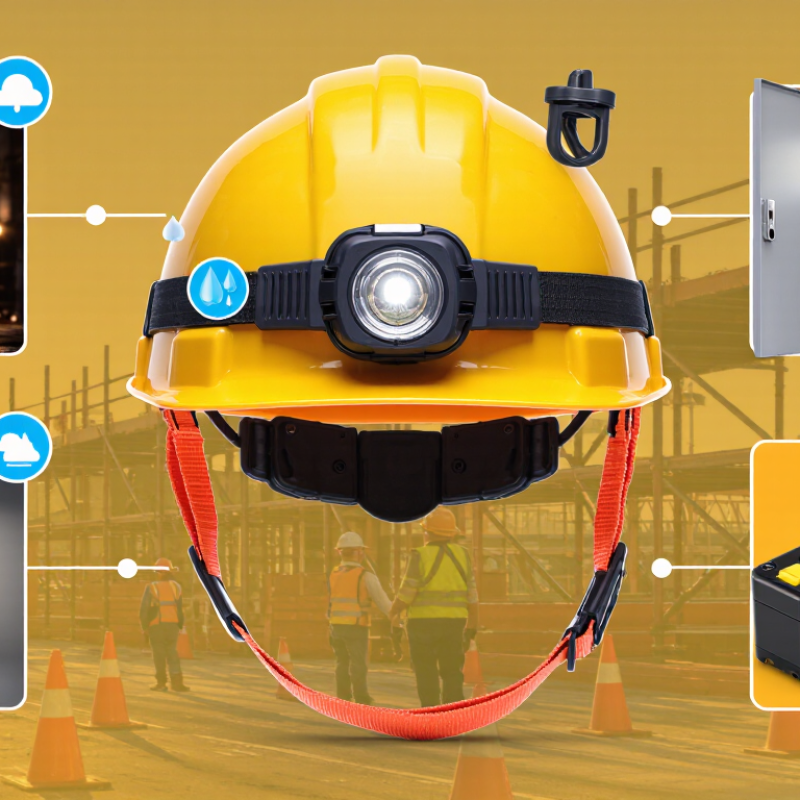
Define Worksite Lighting Needs with 100–500 Lumens and Suitable Beam Angles
How to Choose the Best Hard Hat Headlamp?
Choosing a hard hat headlamp starts with the worksite, not the product box. I have found that 100–200 lumens suits close tasks, such as reading labels or checking wiring. Dim areas may need 300–500 lumens. More light is not always better. Excess brightness can create glare on metal surfaces, glass, or wet floors. It may also distract nearby workers.
Beam angle matters as much as lumen output. A narrow beam, around 10–25 degrees, reaches farther and helps with inspections or outdoor movement. A wider beam, around 40–90 degrees, covers tools, ladders, and nearby obstacles. Some jobs need both. For example, a technician may use a focused beam while examining a cable, then switch to a wider beam when walking. Check the headlamp’s real operating time, weight, mounting stability, and published testing details. A loose lamp is a poor tool.
Tips: Match 100–500 lumens to the area, task distance, and surrounding light. Test the beam while wearing gloves. Walk, bend, and look down before deciding. I once preferred a very bright setting, but it caused harsh reflections and faster battery loss. That mistake changed my selection process. Choose the lowest useful brightness, and keep a spare power source when site procedures allow it.
Verify Helmet Fit Against ANSI Z89.1, EN 397, and Manufacturer Requirements
Choosing the best hard hat headlamp begins with the helmet, not the light. ANSI Z89.1 and EN 397 define performance requirements for protective helmets, but they do not automatically approve every headlamp attachment. Check the helmet marking, model instructions, and accessory guidance before installation. The headlamp should fit without covering impact labels, blocking ventilation, or changing the shell’s position.
I have tested headlamps on both vented and non-vented helmets. The results were not always obvious. A clip may feel secure indoors but shift when climbing, bending, or working in wind. Confirm that the mount matches the helmet’s brim, slots, or suspension system. Do not drill the shell or modify its structure. Use only attachment methods permitted by the manufacturer. Check clearance around the brow and chin strap. Small pressure points become painful after a long shift.
Fit matters more than brightness. Wear the complete helmet and headlamp for several minutes. Walk, look upward, and turn your head sharply. The helmet should remain stable, while the beam should point where your eyes focus. Battery weight can pull the front downward. A rear battery may improve balance, but it can interfere with other equipment. Recheck the setup after cleaning or replacing the suspension. My earlier assumption was that a universal clip meant universal compatibility. It did not. When requirements conflict, follow the stricter instruction and replace any damaged or unstable component.
This chart shows where each fit check should be verified. ANSI Z89.1 and EN 397 apply primarily to the protective helmet and its retention system; headlamp attachment, clearance, and mounting limitations must also be confirmed against the helmet and headlamp manufacturer instructions. A value of 1 means the verification layer should be checked, not that the standard certifies a particular headlamp.
Compare Runtime, Beam Distance, and IP Ratings Under ANSI/PLATO FL 1
Choosing the best hard hat headlamp starts with its tested performance, not its highest lumen claim. Under ANSI/PLATO FL 1, runtime measures how long a light operates until output falls to 10 percent of its initial level. Compare runtime at the brightness you actually use. A lamp rated for 12 hours on low may last only two hours on high. That difference matters during a long shift.
Beam distance is also tested under ANSI/PLATO FL 1. It indicates how far the beam reaches before falling to 0.25 lux. A longer beam helps when inspecting distant structures, but it may feel narrow in confined spaces. For ladder work or equipment repair, a wide, even beam often proves more useful. I have seen workers choose distance over comfort and regret it underground. More reach is not always better.
IP ratings describe resistance to dust and water under IEC 60529, rather than ANSI/PLATO FL 1. An IP rating with strong dust protection and water resistance suits concrete dust, rain, and frequent cleaning. Check whether the rating applies with the battery cover fully closed. Small sealing mistakes can matter. Also examine beam stability, switch operation with gloves, and mounting security. Test the lamp on your helmet before relying on its published numbers; real temperatures, batteries, and movement can change performance.
Evaluate Weight, Balance, and 180°–360° Headlamp Adjustability
How to Choose the Best Hard Hat Headlamp?
A hard hat headlamp should stay stable while you climb, crouch, or turn sharply. Weight matters, but balance matters more. A front-heavy lamp can pull the shell forward and create neck strain during long shifts. The U.S. Bureau of Labor Statistics recorded 1,075 fatal work injuries in private construction in 2023. That figure reinforces the need for equipment that supports clear vision and secure head protection.
Test the lamp with gloves on. Adjust the beam from 180° for forward tasks to 360° when checking floors, ladders, or nearby tools. A smooth hinge is useful, but excessive movement can cause accidental repositioning. The beam should follow your head without forcing your neck to compensate. ANSI/ISEA Z89.1-2014 (R2019) addresses protective helmet performance, but it does not replace a practical fit test with attached lighting. I once selected a compact lamp that felt comfortable indoors. After two hours outdoors, its front weight became distracting. My first judgment was incomplete.
Look for a low-profile design that keeps the center of gravity close to the helmet. Check whether the mounting system remains secure after repeated adjustment. A useful test is simple: walk, bend, and look upward several times. If the lamp shifts, the balance is wrong. Also consider whether the 180°–360° range creates useful coverage rather than scattered glare. Small details matter.
Check Battery Safety and Intrinsic-Risk Certifications Including ATEX and UL 913
Choosing a hard hat headlamp starts with battery safety, not brightness.
Lithium batteries can overheat, vent, or ignite after damage. The U.S. Fire Administration highlights rising lithium-ion battery fire concerns in its 2023 safety guidance. NFPA recorded about 1.39 million fires in the United States during 2023. That figure covers all fire types, not headlamps. Still, it shows why small devices deserve serious controls.
Look for protected cells, short-circuit protection, controlled charging, and a robust battery enclosure. Avoid loose replacement cells or mixed battery types. Check the specified charging temperature and storage limits. A certification label is not a magic shield. Confirm that the certificate covers the complete headlamp and battery pack. Some documents cover only the lighting module, which creates an uncomfortable gap.
For explosive atmospheres, verify ATEX conformity under Directive 2014/34/EU. Match the marking with the workplace zone, gas or dust group, and temperature class. UL 913 certification indicates requirements for intrinsically safe electrical apparatus. It does not automatically approve every accessory or operating condition. Check the certificate number, ambient-temperature range, and approved battery configuration. IECEx documentation can provide another useful comparison. Certification databases and technical files deserve more attention than marketing claims. I would also inspect cracked housings, loose seals, and distorted contacts before every shift. That inspection takes seconds, but workers often skip it. The weak point may be human behavior.