How to Choose the Best Solar Powered Street Lights for Your Needs?
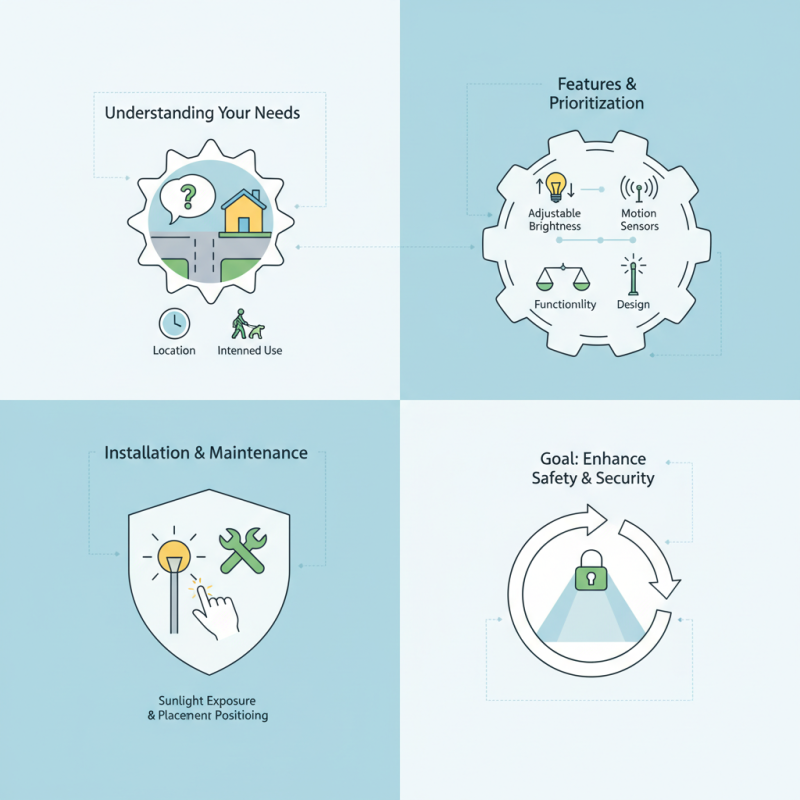
Choosing the right Solar Powered Street Lights can be challenging. With many options available, it's essential to understand your specific needs. Industry expert Dr. Sarah Johnson once stated, “The effectiveness of solar lights relies heavily on understanding the location and intended use.” Her insight highlights the importance of careful consideration.
Solar Powered Street Lights come in various styles and features. Some offer adjustable brightness levels, while others have motion sensors for energy efficiency. Evaluating these features can ensure you get the best value. How do you prioritize functionality versus design? This question is vital when making a choice.
Moreover, installation and maintenance are crucial factors. Solar lights require sunlight exposure, so placement matters. Improper positioning can lead to reduced effectiveness. Mistakes in this area can require reflecting on past choices. Remember, the goal is to enhance safety and security in your surroundings.
Factors to Consider When Selecting Solar Powered Street Lights
Choosing solar powered street lights involves several key factors. Start by considering the brightness needed for your area. Lumens measure brightness. More lumens mean brighter lights. Think about where the lights will be installed. If it’s a busy street, higher lumens are essential. For parks or less trafficked areas, lower brightness might suffice.
Battery capacity is another important factor. Look for lights with reliable batteries. They should last through the night. Check the solar panel efficiency as well. Higher efficiency panels absorb more sunlight. This leads to better performance in cloudy or winter months. The material quality also matters. Durable materials increase longevity and withstand harsh weather.
Installation should be straightforward. Some models require professional help, while others are easy to set up. Assess your own skills. It might be tempting to choose the cheapest option. However, this can lead to regrets later. If lights fail early, costs can add up. Make careful choices. Quality can save you money in the long run.
Types of Solar Powered Street Lights Available in the Market
When choosing solar powered street lights, understanding the types available is key. There are different styles, each serving various needs. For instance, all-in-one lights are compact and easy to install. They integrate the solar panel, battery, and light source into a single unit. This design saves space and reduces wiring needs. However, their light output may not be as strong as larger systems.
Another option is the split-type solar street lights. These consist of separate components. The solar panel can be mounted away from the light fixture. This allows for more flexibility in installation. The downside? Higher installation complexity and potential for more maintenance. Additionally, there are lights with motion sensors. They are energy-efficient and can save power by illuminating only when movement is detected. But they might not provide constant light in dimly lit areas.
Consider durability and weather resistance. Some models may not withstand harsh conditions. Others might have limited battery life. It's essential to assess how different types fit your specific environment. Think about the overall brightness needed as well. Selecting the right type can make a significant difference in your lighting experience.
Key Features to Look for in Solar Powered Street Lights
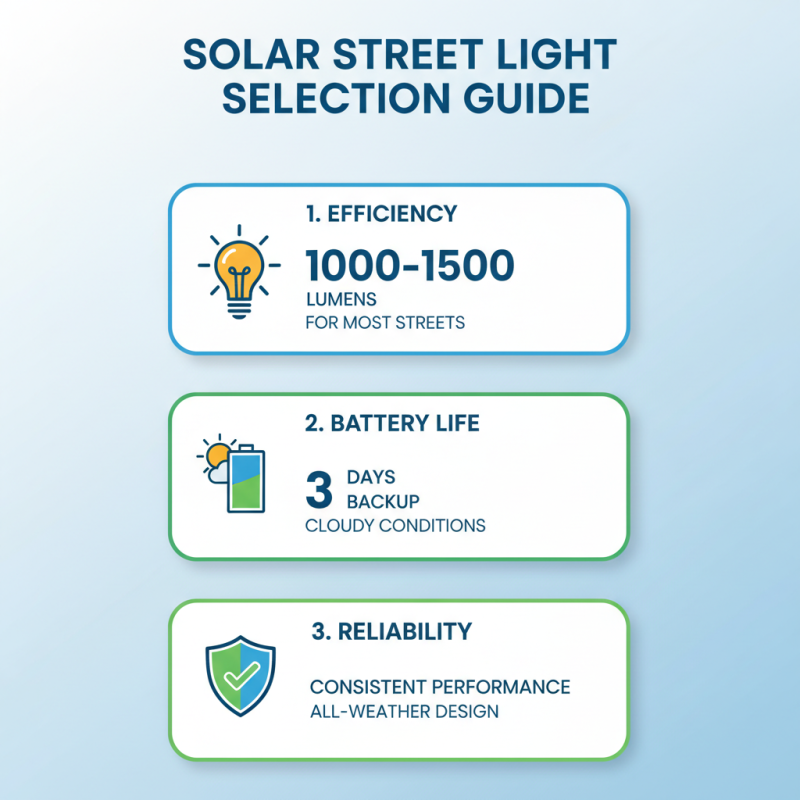
When selecting solar-powered street lights, focus on essential features to meet your needs. Efficiency is key. Look for lights with high lumen output, typically between 1000 to 1500 lumens for most street applications. Battery life matters too. A reliable system should have a battery backup lasting at least three days during cloudy conditions.
Consider the solar panel size. Ideally, it should be at least 15% efficiency. Some reports indicate that larger panels significantly increase energy conversion. Opt for lights with adjustable brightness settings. This feature helps manage energy use and extends battery life. A good range might be between 30% and 100% brightness.
Tips: Check for IP ratings. A rating of IP65 or higher ensures durability against dust and water. Also, verify warranty conditions. Many lights come with a 2 to 5-year warranty, indicating trust in product longevity. Installation is another aspect that’s often overlooked. Ensure it can easily adapt to various mounting options and terrains. Careful consideration of these features can greatly enhance lighting performance and sustainability.
Evaluating the Energy Efficiency of Solar Powered Street Lights
When evaluating the energy efficiency of solar powered street lights, several factors come into play. One key aspect is the type of solar panel used.
Monocrystalline panels often offer higher efficiency than polycrystalline ones. They convert sunlight into electricity more effectively,
which helps in low-light conditions. However, they can be more expensive.
Another important consideration is the battery capacity. Batteries store energy for nighttime use. A larger capacity battery will provide longer illumination,
but it may also increase costs. It's crucial to find a balance between price and performance. Additionally, the LED technology used in these lights significantly impacts energy efficiency.
High-quality LEDs consume less power while offering brighter light.
Placement and angle of the lights also matter. Improper installation may lead to suboptimal performance. Evaluating the location for the best sunlight exposure can prevent wasted energy.
Some users may overlook the initial setup but overlook the long-term savings potential. Reflecting on these aspects can ensure that you choose the right solar powered street lights for your specific needs.
Assessing the Cost-Effectiveness of Solar Powered Street Lighting Solutions
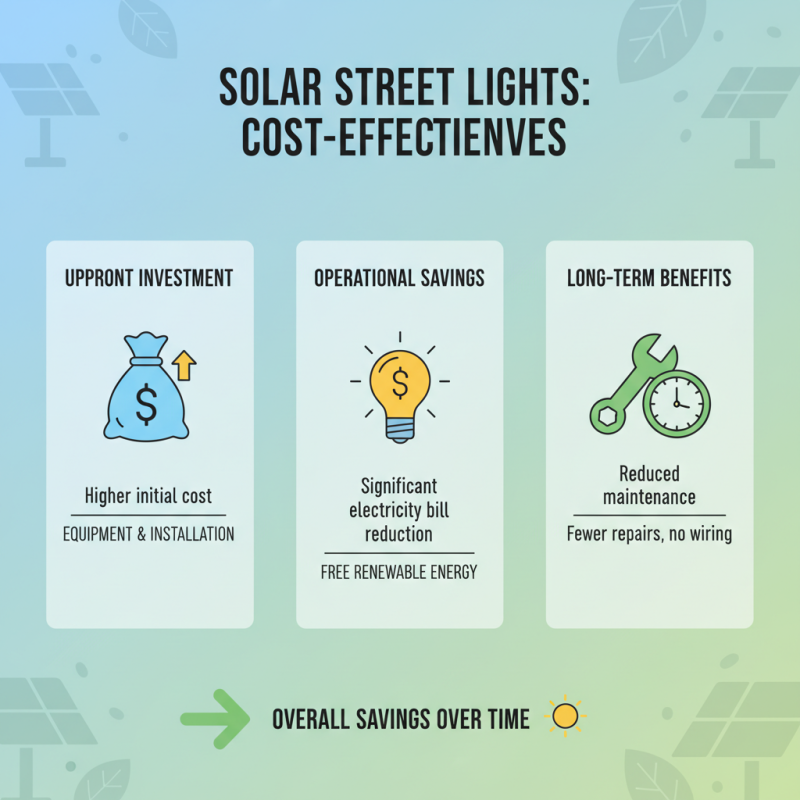
When considering solar powered street lights, cost-effectiveness is key. These solutions often involve a higher upfront investment, but savings on electricity bills can be significant. A thoughtful analysis reveals that these lights require less maintenance. This can lead to further cost savings over time.
It’s also essential to evaluate the installation process. Some systems are easier to install, while others may need professional help. This can increase initial costs. Furthermore, local climate conditions affect performance. In areas with less sunlight, the efficiency of solar panels might decrease. This uncertainty can complicate long-term cost assessments.
Return on investment varies by location. Urban areas may benefit tremendously, while rural settings might not see the same gains. Understanding your specific needs is crucial. Sometimes, more affordable conventional lighting options may provide better short-term value. Always weigh the initial costs against expected savings to determine the best choice for your situation.